How Can the M7N Multi Spring Mechanical Seal Improve Industrial Pump Reliability
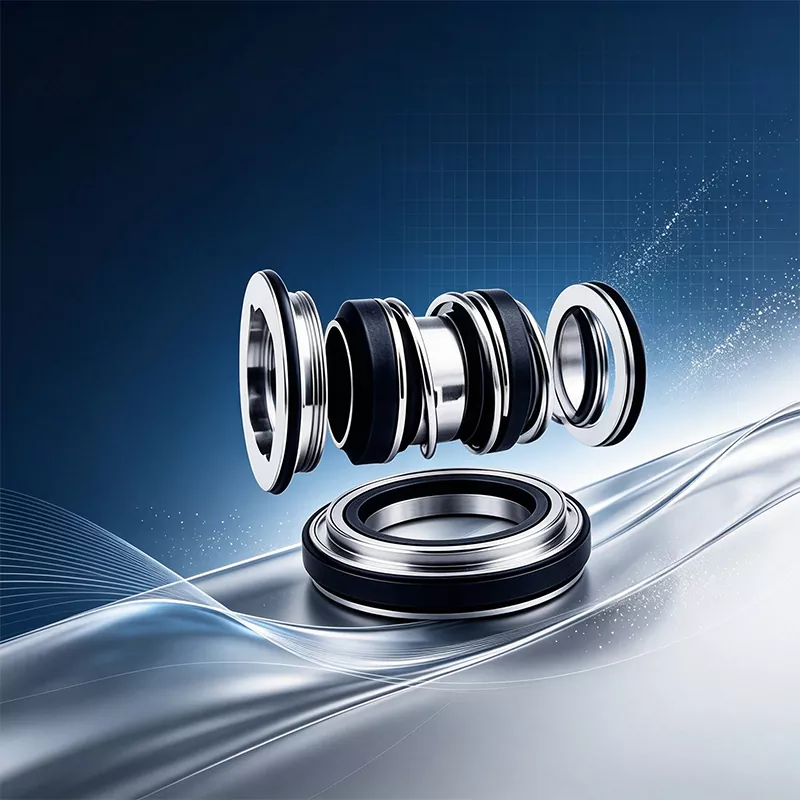
Qixing manufactures the M7N Multi Spring Mechanical Seal for industrial pump applications that require dependable fluid containment, dimensional accuracy, and material compatibility. Designed for clean water, sewage water, oil, and other moderately corrosive fluids, this sealing solution supports new equipment production, routine maintenance, and replacement projects across multiple industries.
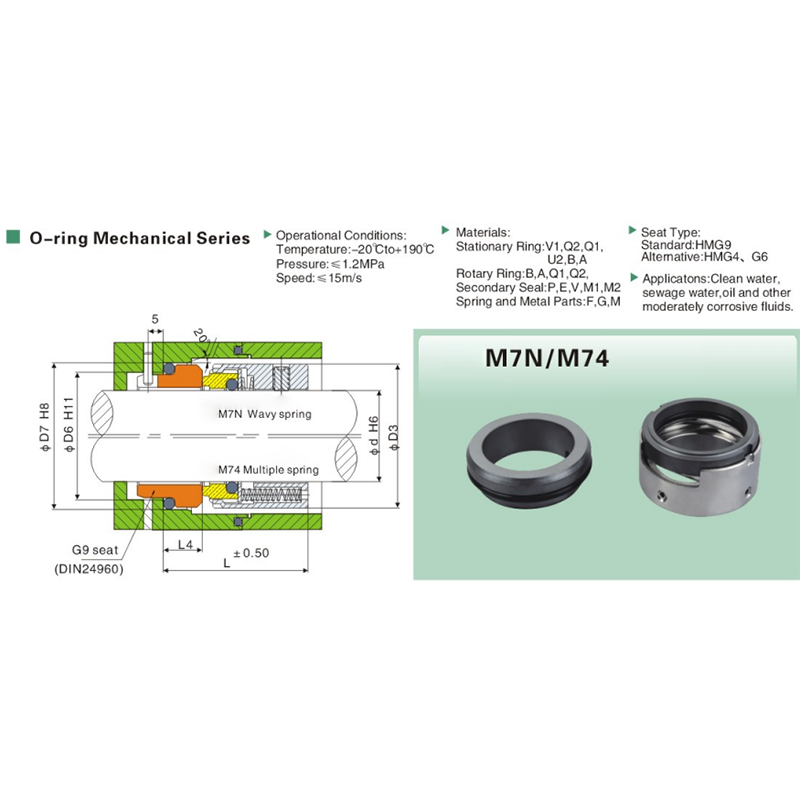
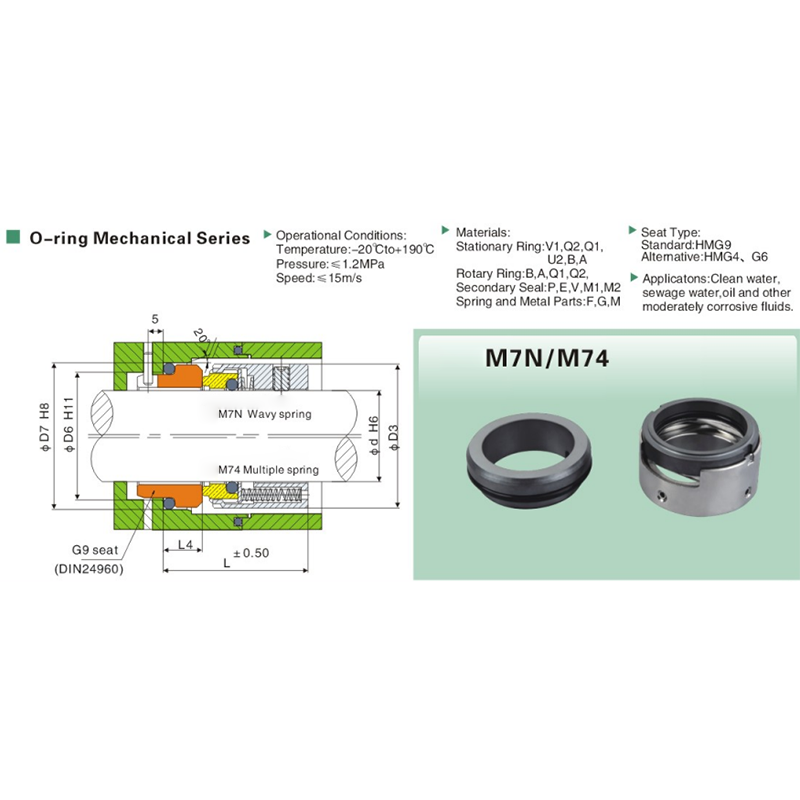
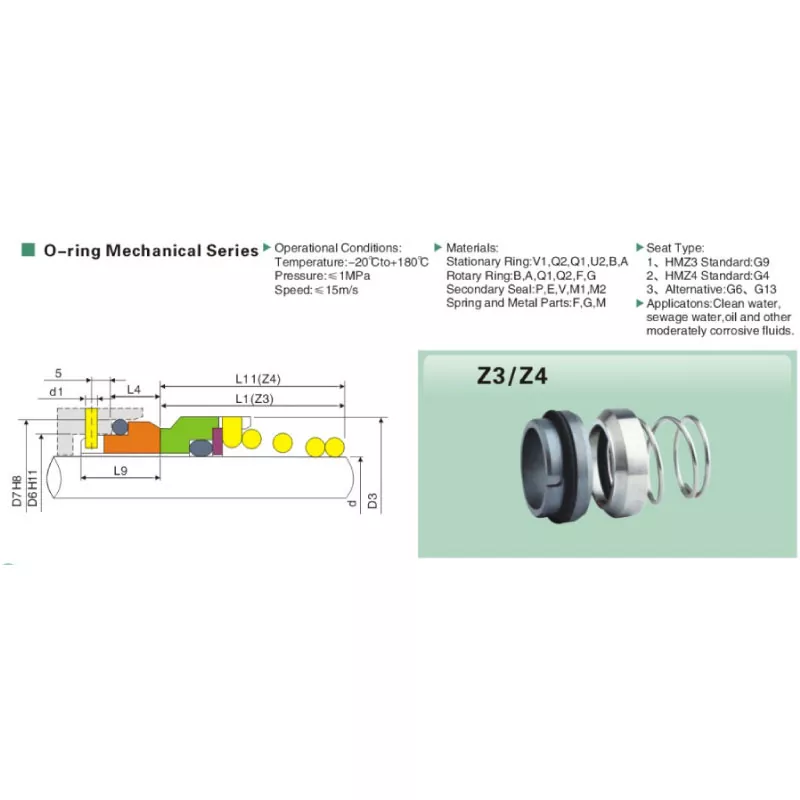
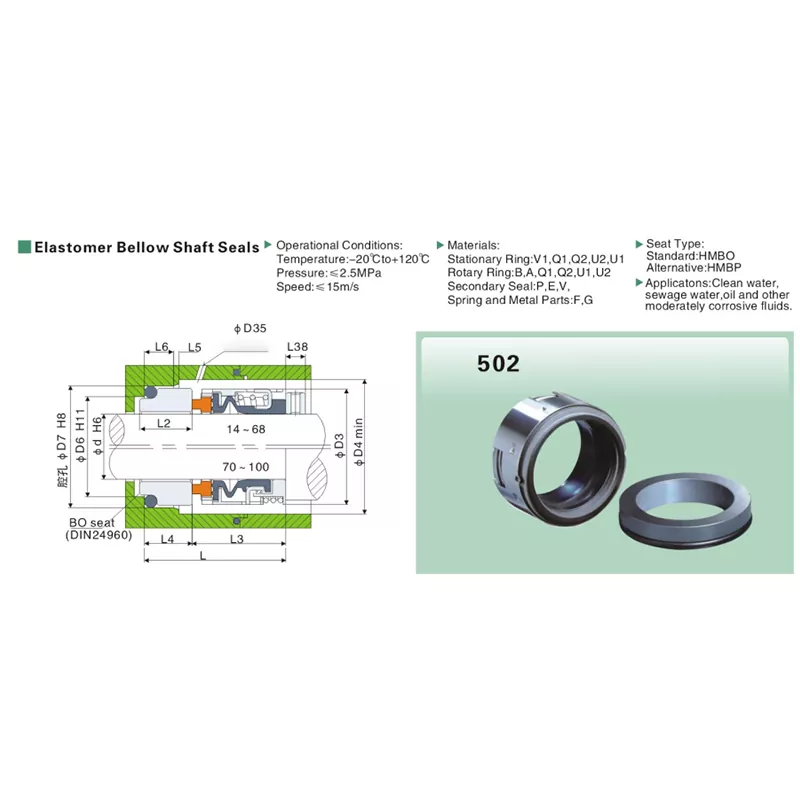
The M7N Multi Spring Mechanical Seal is an O-ring mechanical seal designed for rotating equipment where reliable sealing and correct installation dimensions are essential. With a shaft diameter range of 14–100 mm, an operating temperature range of -20°C to +190°C, a maximum pressure of 1.2 MPa, and a maximum sliding speed of 15 m/s, it accommodates a range of industrial pump requirements. Its performance depends on appropriate seal-face materials, secondary sealing elements, stationary-seat configuration, and operating conditions. This guide explains the working principle, key specifications, material selection, industrial applications, replacement measurements, and maintenance considerations to help engineers and purchasing teams make informed decisions.
Table of Contents
- What Is an M7N Multi Spring Mechanical Seal?
- How Does the M7N Mechanical Seal Work?
- What Are the Main Technical Specifications?
- How Should You Select Seal Materials?
- Which Industrial Applications Suit the M7N?
- How Do You Choose the Correct Seal Size?
- How Can You Extend Mechanical Seal Service Life?
- Frequently Asked Questions
- Conclusion: Choosing the Right M7N Seal
1. What Is an M7N Multi Spring Mechanical Seal?
An M7N Multi Spring Mechanical Seal is a mechanical shaft sealing assembly used in pumps and other compatible rotating equipment. It helps control process-fluid leakage by maintaining contact between rotating and stationary sealing faces while accommodating normal operating movement within the limits of its design.
The M7N belongs to the O-ring mechanical seal family. Its construction combines primary sealing faces, secondary sealing elements, spring components, metal parts, and a stationary seat. The selected materials and dimensions determine whether the assembly is suitable for a particular machine and working medium.
According to the Qixing M7N product specifications, the model is available for shaft diameters from 14 mm to 100 mm. The product can be considered for new pump installations and replacement projects where the installation dimensions and operating requirements are compatible.
Its practical advantages include:
- A broad range of shaft sizes for different pump configurations.
- Multiple material options to address varying fluid and temperature requirements.
- Standard and alternative stationary-seat configurations.
- Dimensional references that support replacement identification.
- Versatility for water, sewage, oil, and selected moderately corrosive media.
It is important to distinguish a multi-spring arrangement from a guarantee of performance under every condition. The actual suitability of a seal depends on the complete configuration and the equipment's operating environment.
2. How Does the M7N Mechanical Seal Work?
A mechanical seal controls leakage through closely matched rotating and stationary faces. During operation, the faces maintain a controlled contact relationship, while the secondary seals prevent fluid from bypassing the intended sealing interfaces.
The spring mechanism supplies closing force to help maintain contact as the equipment experiences normal movement and dimensional changes. The O-ring arrangement provides secondary sealing while allowing the movement required by the design.
Several factors influence sealing performance:
- Face condition: Flat, undamaged sealing surfaces help maintain the intended interface.
- Spring function: Correct spring installation and movement help preserve face contact.
- Fluid lubrication: The process medium and operating conditions influence friction and heat at the faces.
- Shaft alignment: Excessive runout, vibration, or misalignment can disturb stable operation.
- Material compatibility: The seal faces and elastomers must withstand the fluid and temperature.
Although multi-spring designs distribute spring force across multiple points, the exact construction of a specific M7N configuration should be confirmed from its product documentation. Buyers should not assume that all M7N variants share identical internal geometry or performance limits.
For additional background, engineers can review Qixing's mechanical seal product range when comparing sealing solutions for different pump applications.
3. What Are the Main Technical Specifications?
Technical specifications provide the starting point for determining whether an M7N seal can operate within a pump's requirements. The following values are published for Qixing's M7N Multi Spring Mechanical Seal.
| Parameter | Specification | Selection Consideration |
|---|---|---|
| Product type | O-ring mechanical seal | Confirm the required installation arrangement. |
| Shaft diameter | 14–100 mm | Match the actual shaft diameter. |
| Operating temperature | -20°C to +190°C | Verify both normal and maximum process temperatures. |
| Maximum operating pressure | 1.2 MPa | Confirm pressure conditions for the selected configuration. |
| Maximum sliding speed | 15 m/s | Calculate speed from shaft diameter and rotational speed. |
| Standard stationary seat | G9 | Check seat dimensions and existing equipment requirements. |
| Alternative stationary seats | G6 / G4 | Verify compatibility before selecting an alternative. |
| Typical media | Clean water, sewage water, oil, and moderately corrosive fluids | Review actual fluid composition and material compatibility. |
These figures are selection limits, not a recommendation to operate continuously at every maximum value simultaneously. Pressure, temperature, speed, and material compatibility must be assessed together. The final operating envelope should be confirmed with the supplier for the specific application.
For instance, a pump handling warm oil at moderate pressure presents different sealing requirements from a wastewater pump containing suspended solids. Even if both machines fall within the nominal dimensional range, their face materials and secondary seals may need to differ.
4. How Should You Select Seal Materials?
Material selection is one of the most important decisions when purchasing an M7N Multi Spring Mechanical Seal. The correct combination helps control wear, chemical degradation, and premature leakage. A material that works well in clean water may not be appropriate for a solvent, a corrosive chemical, or a fluid containing abrasive particles.
Qixing lists several material-code options for the M7N assembly:
| Component | Available Codes | What to Verify |
|---|---|---|
| Stationary ring | V1 / Q1 / Q2 / U2 / B / A | Face properties, seat configuration, and compatibility. |
| Rotary ring | B / A / Q1 / Q2 | Wear resistance and compatibility with the stationary face. |
| Secondary seal | P / E / V / M1 / M2 | Fluid resistance and temperature suitability. |
| Spring and metal parts | F / G / M | Corrosion resistance and mechanical requirements. |
These are product material codes rather than universal material names. Their precise material definitions should be confirmed with Qixing before ordering, particularly where chemical compatibility is critical.
Use the following process to narrow down the material combination:
- Identify the medium. Provide the fluid name, concentration, additives, and any suspended solids.
- Establish the temperature range. Include startup, shutdown, cleaning, and other temperature variations.
- Confirm pressure and speed. Consider the actual operating cycle rather than only the normal running point.
- Review chemical resistance. Verify the rotary face, stationary face, O-ring, springs, and metal components individually.
- Confirm the complete assembly. Ensure that the selected materials and seat arrangement are available and compatible.
For demanding chemical or abrasive service, engineering review is preferable to selecting materials by price alone. The cost of a suitable seal should be evaluated against the potential expense of leakage, equipment downtime, and repeat replacement.
5. Which Industrial Applications Suit the M7N?
The M7N is designed for a range of pump duties, particularly those involving clean water, sewage water, oil, and selected moderately corrosive fluids. Its suitability for any particular process depends on the fluid properties, pump design, operating conditions, and material combination.
- Water supply and circulation: Suitable configurations may be used in compatible industrial water pumps and circulation systems.
- Wastewater treatment: The M7N can be considered for wastewater pumps when solids content, contamination, and material compatibility have been evaluated.
- Oil transfer: Appropriate configurations may serve oil-handling pumps when the secondary seals and face materials are compatible with the specific oil.
- General industrial processing: Selected process pumps can use the M7N where pressure, temperature, speed, and installation dimensions remain within the approved limits.
- Pump maintenance and replacement: The dimensional range supports replacement projects when the existing seal arrangement can be accurately identified.
Consider a maintenance team replacing a worn seal on an industrial water-transfer pump. Instead of ordering solely by the name printed on the old assembly, the team records the shaft diameter, stationary-seat dimensions, installation length, fluid temperature, and operating pressure. These details allow the replacement to be checked against the pump's actual requirements and reduce the risk of ordering an incompatible part.
This example illustrates a practical selection method rather than a claim about a specific customer installation. For wastewater or corrosive-fluid service, further assessment may be necessary if the process contains abrasive solids or aggressive chemical compounds.
6. How Do You Choose the Correct Seal Size?
Dimensional compatibility is essential when installing an M7N Multi Spring Mechanical Seal. A matching shaft diameter is necessary, but it does not establish that the complete assembly will fit the pump.
For replacement projects, check the following dimensions against the original seal, pump drawing, or verified sample:
| Dimension | Purpose | Recommended Action |
|---|---|---|
| d | Identifies the shaft diameter. | Measure the shaft or verify its nominal size. |
| D3 / D2 / D1 | Defines key radial dimensions. | Compare with available installation space. |
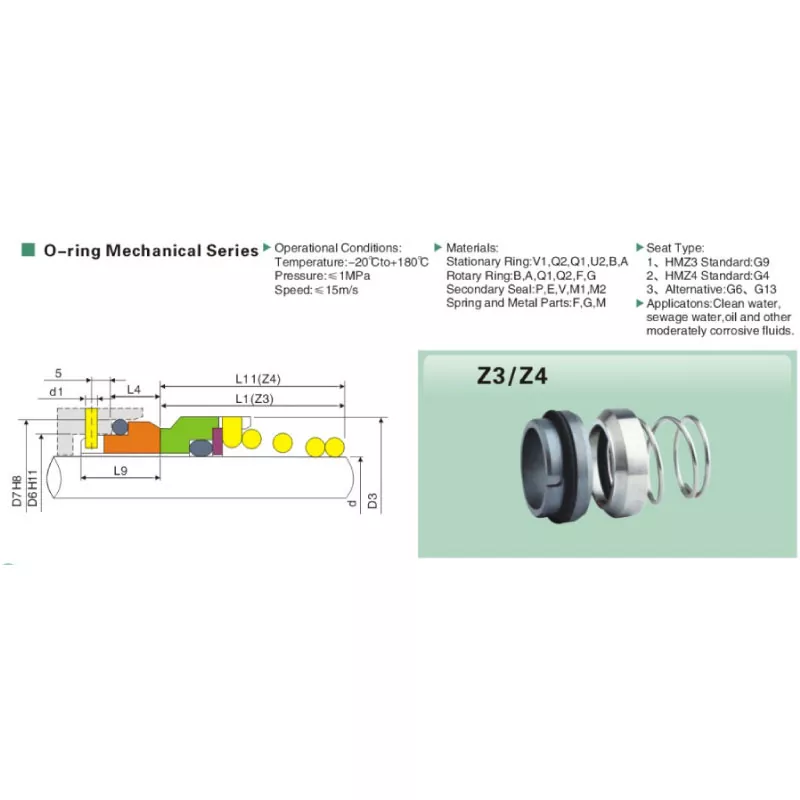
| d1 | Supports checking the fixing and seat arrangement. | Verify the corresponding drawing dimensions. |
| L1 / L2 / L3 / L5 | Defines relevant axial dimensions. | Compare the installation length with the existing assembly. |
| M | Identifies the fixing thread size. | Confirm the thread specification before installation. |
A reliable purchasing checklist includes:
- Pump manufacturer and model, if available.
- Existing seal model and shaft diameter.
- Radial dimensions, axial dimensions, and fixing details.
- Working fluid and expected contamination level.
- Operating temperature, pressure, and shaft speed.
- Required stationary-seat configuration.
- Photos, a dimensional drawing, or an old seal sample.
When a replacement is being sourced from a China manufacturer or supplier, provide the same technical information to every shortlisted vendor. This creates a more meaningful comparison than evaluating quotations by model name or unit price alone.
You can also explore the M7N product page and dimensional references to check the listed size options before submitting an inquiry.
7. How Can You Extend Mechanical Seal Service Life?
Correct installation and suitable operating conditions are essential for dependable mechanical seal performance. Even a properly selected seal can fail prematurely if it is installed incorrectly, exposed to incompatible chemicals, or operated without adequate lubrication at the sealing interface.
Maintenance teams should focus on these practical measures:
- Inspect the equipment before installation. Check the shaft, seal chamber, stationary seat, and mating surfaces for damage, corrosion, or deposits.
- Follow installation instructions. Keep sealing faces clean and avoid scratching or contaminating precision surfaces.
- Verify shaft condition. Excessive runout, vibration, or misalignment should be corrected before commissioning.
- Prevent dry running. Confirm that the seal is properly wetted or lubricated by the process arrangement before starting the pump.
- Monitor operating conditions. Investigate unusual leakage, temperature increases, noise, vibration, or changes in pump performance.
- Review recurring failures. Record failure symptoms and operating data to identify whether the cause is installation, material compatibility, contamination, or equipment condition.
Small amounts of leakage behavior can vary by seal design and service conditions. Follow the equipment manufacturer's guidance for acceptable leakage and inspection intervals rather than applying one universal threshold to every installation.
For operations involving hazardous fluids, establish suitable isolation, depressurization, drainage, and personal protective procedures before inspection or replacement. A mechanical seal should never be removed from pressurized or energized equipment.
8. Frequently Asked Questions
1. What shaft sizes are available for the M7N Multi Spring Mechanical Seal?
The published shaft diameter range is 14–100 mm. The complete dimensional arrangement should also be checked to ensure that the seal fits the intended pump.
2. What is the maximum operating temperature of the M7N?
The listed operating temperature range is -20°C to +190°C. Actual suitability depends on the selected materials, fluid properties, and operating conditions.
3. What is the maximum pressure rating?
The published maximum operating pressure is 1.2 MPa. Confirm the allowable pressure for the intended configuration and consider the complete operating envelope before installation.
4. Which fluids can the M7N handle?
Typical applications include clean water, sewage water, oil, and other moderately corrosive fluids. The specific fluid composition must be reviewed to confirm compatibility with the seal faces, O-rings, springs, and metal components.
5. Which stationary seat is used in the M7N?
G9 is the standard stationary seat, while G6 and G4 are listed as alternatives. Check the seat dimensions and existing pump arrangement before choosing a different configuration.
6. Can the M7N replace an existing mechanical seal?
It may be suitable if the shaft diameter, radial dimensions, axial installation length, fixing details, material combination, and operating limits match the application. A model name alone is not enough to confirm interchangeability.
7. What information is needed for an M7N quotation?
Provide the shaft diameter, key installation dimensions, working medium, temperature, pressure, shaft speed, stationary-seat requirements, order quantity, and any available photographs, drawings, or existing seal samples.
9. Conclusion: Choosing the Right M7N Seal
The M7N Multi Spring Mechanical Seal offers a practical option for compatible industrial pump applications, with a 14–100 mm shaft size range, a published temperature range of -20°C to +190°C, pressure up to 1.2 MPa, and sliding speed up to 15 m/s. Its effectiveness depends on accurate dimensional matching, suitable material selection, correct installation, and operation within the applicable limits.
For purchasing teams and maintenance engineers, the best approach is to evaluate the complete application rather than relying on the model designation alone. Checking the shaft, seat, installation length, fluid chemistry, and operating data helps reduce compatibility risks and supports more dependable equipment maintenance.
Whether you are sourcing a replacement seal, planning a new pump assembly, or comparing material options, contact us at Qixing to discuss your M7N Multi Spring Mechanical Seal requirements. Share your technical drawings, existing seal sample, or operating parameters to help our team assess dimensional compatibility, review material options, and prepare a solution suited to your application.
Explore the M7N Multi Spring Mechanical Seal or email Headquarters@qxpumpseals.com to request product information and a quotation.
Related News
- How Can a 2NT Single Spring Mechanical Seal Improve Pump Reliability and Sealing Performance
- How Can an M7N Multi Spring Mechanical Seal Improve Pump Sealing Performance
- Technology Upgrades and Service Capabilities Equal Focus — Evolving Competitive Landscape in Seals Market
- Single-Spring vs. Multi-Spring Selection Debate — Operating Conditions Outweigh Spring Count
- Global Single Spring Mechanical Seals Market Sees Steady Growth, Oil & Gas and Chemical Sectors Lead Demand
Leave me a message
News Recommendations