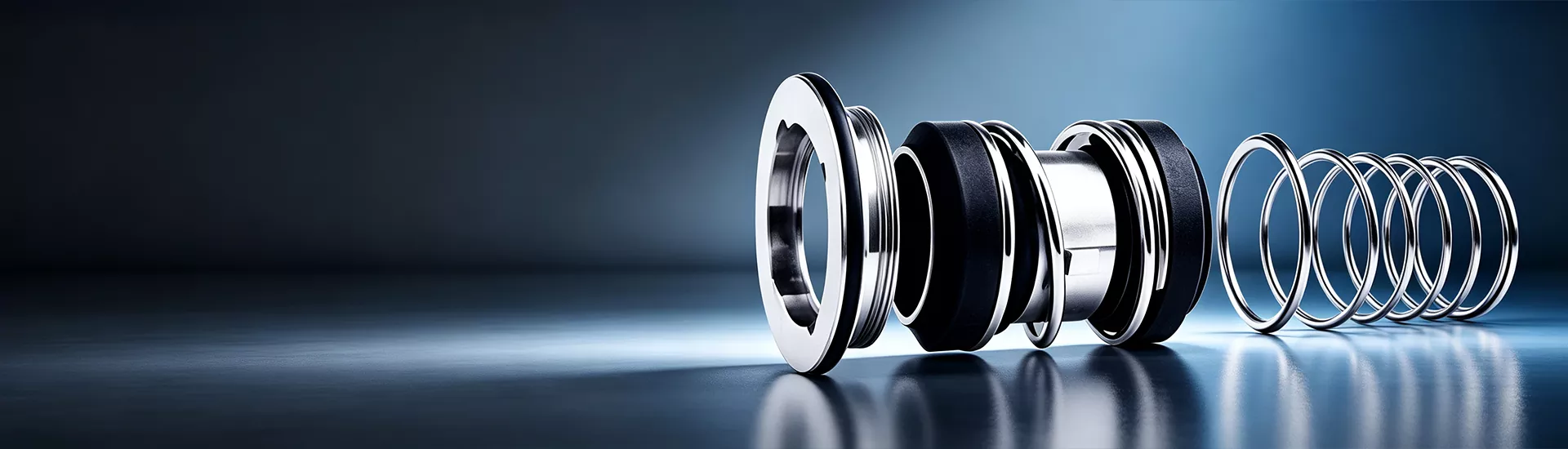
China Chemical Pump Mechanical Seals Manufacturer
In industrial pumping systems, sealing technology determines uptime, maintenance cost, and environmental safety. When fluids contain aggressive acids, alkalis, solvents, oxidizers, or mixed chemical streams, standard mechanical seals fail quickly through corrosion, swelling, or thermal shock. Qixing designs and manufactures Chemical Pump Mechanical Seals specifically for these demanding conditions. Every component—from the seal faces to the secondary elastomers and metal hardware—is selected to withstand chemical attack while maintaining stable film lubrication and minimal leakage.
Configuration Options for Aggressive Chemical Services
Chemical Pump Mechanical Seals can be configured in single, double, or tandem arrangements depending on the hazard level of the pumped fluid, emission regulations, and available flush systems.
- Single cartridge seal (QXS-201): Ideal for general chemical transfer where fugitive emissions are controlled by a simple flush. Installation error is minimized with preset face loading and gland centering tabs. The cartridge sleeve is available in 316L, Alloy 20, or Hastelloy C with a hard-coated wear surface under the dynamic O-ring.
- Double balanced seal (QXS-202): Used for toxic, flammable, or crystallizing chemicals. Two seal faces run back-to-back with a barrier fluid between them at a pressure higher than the process. This prevents process fluid from contacting the atmosphere. Qixing offers stationary and rotary versions with integral pumping ring for barrier circulation.
- Metal bellows seal (QXS-203): For high-temperature chemical services up to 300°C where elastomers cannot survive. The welded metal bellows acts as both spring and dynamic secondary seal, eliminating the need for an elastomer on the shaft. Bellows material options include Inconel 718, Hastelloy C-276, and AM350 stainless steel.
- PTFE spring energized seal (QXS-204): Designed for low-speed mixers and agitators in chemical reactors. The PTFE jacket encapsulates a corrosion-resistant spring, making it suitable for highly reactive media where no metal contact is allowed.
Key Design Features That Extend Seal Life in Chemical Duty
Qixing Chemical Pump Mechanical Seals incorporate several proprietary features that improve reliability in aggressive media:
- Hydropad face technology: Laser-machined micro-pads on the stationary face create hydrodynamic lift during rotation, reducing contact friction and face temperature by up to 15°C compared to plain faces. This is especially useful for low-viscosity solvents with poor lubricity.
- Anti-clogging spring design: Springs are placed on the atmospheric side of the seal or isolated in a clean chamber. For slurry services, a bellows cover or PTFE boot prevents solid particles from packing around the spring mechanism.
- Quench port integration: Standard gland plates include 1/4" NPT or BSP flush, quench, and drain ports. A carbon bushing in the gland bore acts as a throttle to maintain flush pressure and prevent vapor escape.
- Drive collar with hard stop: The drive collar is pinned to the shaft sleeve and includes a hard stop to prevent over-compression of the seal faces during installation. This feature is critical in chemical plants where maintenance personnel are often working with gloved hands and limited visibility.
- Bidirectional capability: All Qixing chemical resistant seals are designed for bidirectional rotation without changing internal components. The drive mechanism uses a positive pin drive rather than set screws, which eliminates shaft fretting and allows reverse rotation without loosening.
Frequently Asked Questions
Q: What is the difference between a chemical resistant mechanical seal and a standard mechanical seal?
A: A standard mechanical seal typically uses a carbon face, Nitrile or EPDM O-rings, and 316 stainless steel hardware. These materials fail quickly when exposed to strong acids, oxidizing agents, or aggressive solvents. A chemical resistant mechanical seal uses upgraded face materials such as solid silicon carbide or tungsten carbide, secondary seals made of PTFE or FFKM, and metal hardware in Hastelloy, Alloy 20, or titanium. Additionally, the seal design includes features like balanced faces, quench ports, and isolated springs to handle corrosive liquids without degrading. The result is a seal that can operate continuously for two to three years in chemical service, whereas a standard seal may last only weeks.
Q: How do I select the right seal face materials for a specific chemical?
A: Start by identifying the chemical class: acid, base, solvent, oxidizer, or mixed stream. Then check the concentration and temperature because aggressiveness increases with both. For most acids, silicon carbide running against silicon carbide provides excellent corrosion resistance and moderate wear behavior. If the fluid contains abrasive particles, switch to tungsten carbide faces for higher hardness. For caustic solutions, use silicon carbide against carbon with an antimony-free binder, because standard resin-impregnated carbon can swell and blister. For oxidizing agents like bleach or hydrogen peroxide, avoid carbon entirely and use silicon carbide vs. silicon carbide with PTFE secondary seals. Always consult a material compatibility chart or contact Qixing engineering with your full fluid composition.
Q: Can a single mechanical seal be used for hazardous or toxic chemicals?
A: In most regulatory environments, a single mechanical seal is not permitted for volatile organic compounds, carcinogens, or acutely toxic chemicals because a single face failure releases the product directly to atmosphere. A dual or double mechanical seal with a barrier fluid at higher than process pressure is required. The barrier fluid creates a liquid film between the two faces, preventing process fluid from reaching the atmosphere even if the inner face fails. Qixing recommends the QXS-202 double cartridge seal with Plan 53B bladder accumulator or Plan 54 external flush for hazardous chemical applications. The double seal also allows monitoring of barrier fluid pressure and level to detect inner seal leakage before it becomes an environmental incident.
Q: What is the maximum temperature a chemical resistant mechanical seal can handle?
A: Temperature capability depends on the seal type and elastomer selection. For elastomer-based seals with FFKM O-rings, the upper limit is approximately 220°C continuous. Above 220°C, elastomers degrade rapidly, so a metal bellows seal must be used. Qixing metal bellows seals in Inconel 718 or Hastelloy C can operate at temperatures up to 300°C. At these temperatures, the barrier fluid must also be selected carefully—synthetic thermal oils or pressurized hot water are common. Always verify the vapor pressure of the pumped liquid at the seal chamber temperature, because local flashing at the faces causes rapid wear and leakage.
- View as
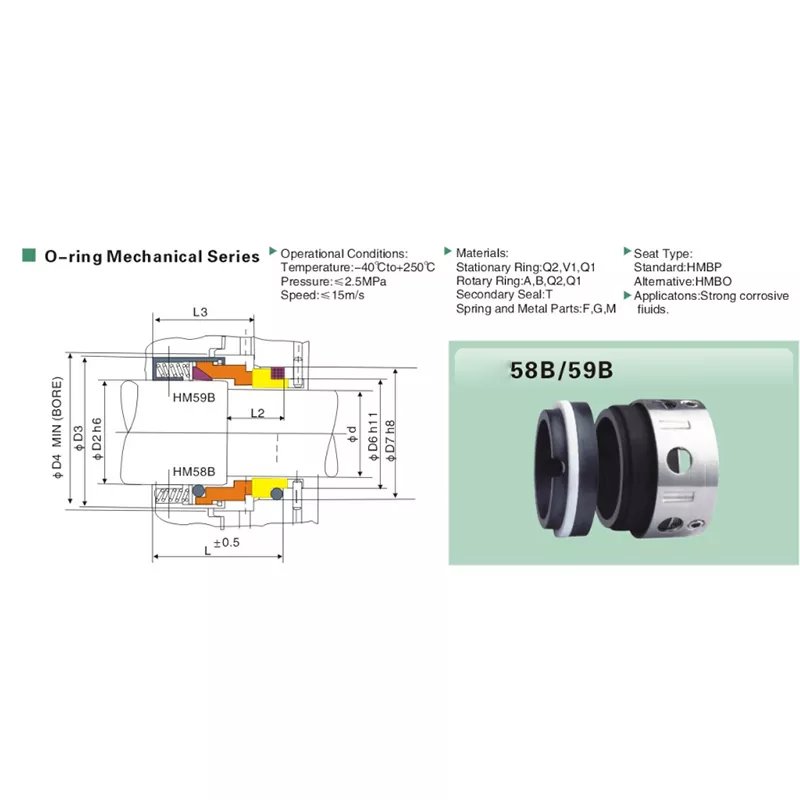
59B Chemical Pump Mechanical Seal
Qixing is a professional 59B Chemical Pump Mechanical Seal manufacturer and supplier offering customized sealing solutions. The 59B covers 14-100 mm shaft sizes, is listed for strong corrosive fluids, and operates within a operating range of -40°C to +250°C and up to 2.5 MPa.
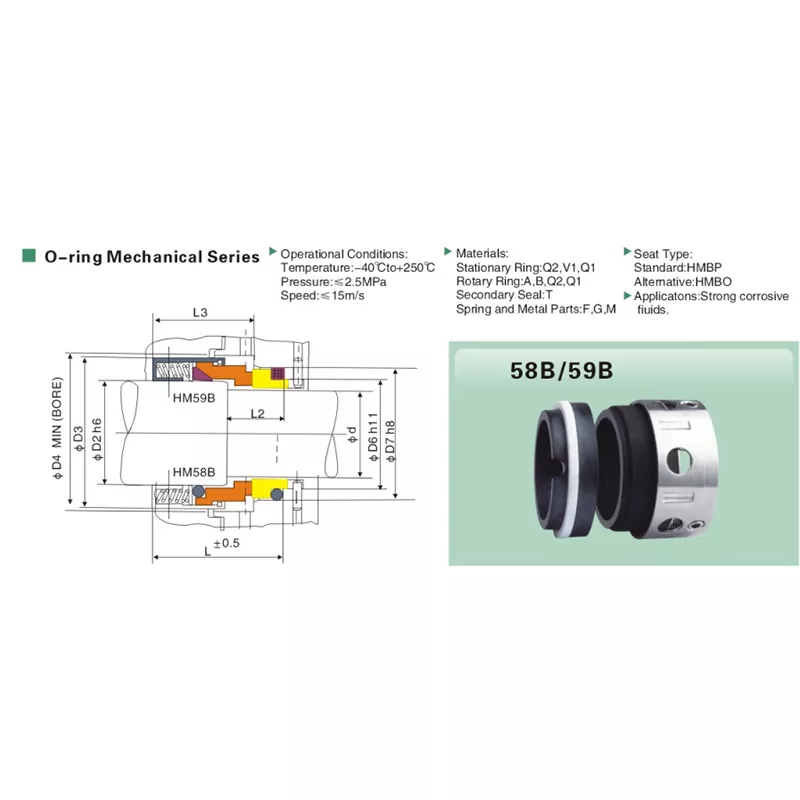
58B Chemical Pump Mechanical Seal
Qixing is a professional 58B Chemical Pump Mechanical Seal manufacturer and supplier offering customized sealing solutions. The 58B covers 14-100 mm shaft sizes and is listed for strong corrosive fluids at -40°C to +250°C, up to 2.5 MPa and 15 m/s.
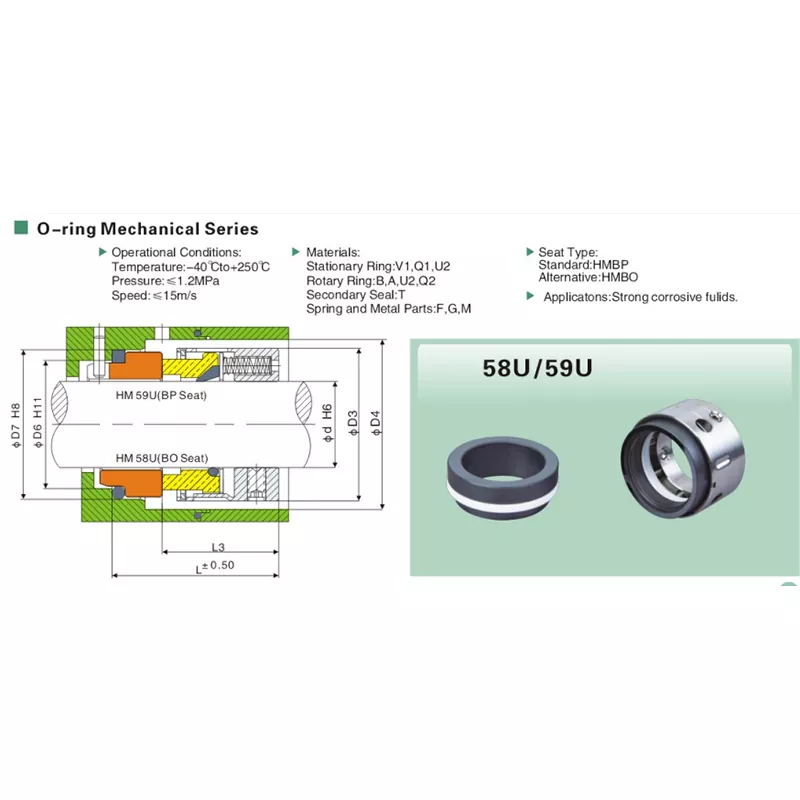
59U Chemical Pump Mechanical Seal
Qixing is a High-Performance 59U Chemical Pump Mechanical Seal manufacturer and supplier offering customized sealing solutions. The 59U covers 14-100 mm shaft sizes, uses a BP stationary seat, and is listed for strong corrosive fluids from -40°C to +250°C.
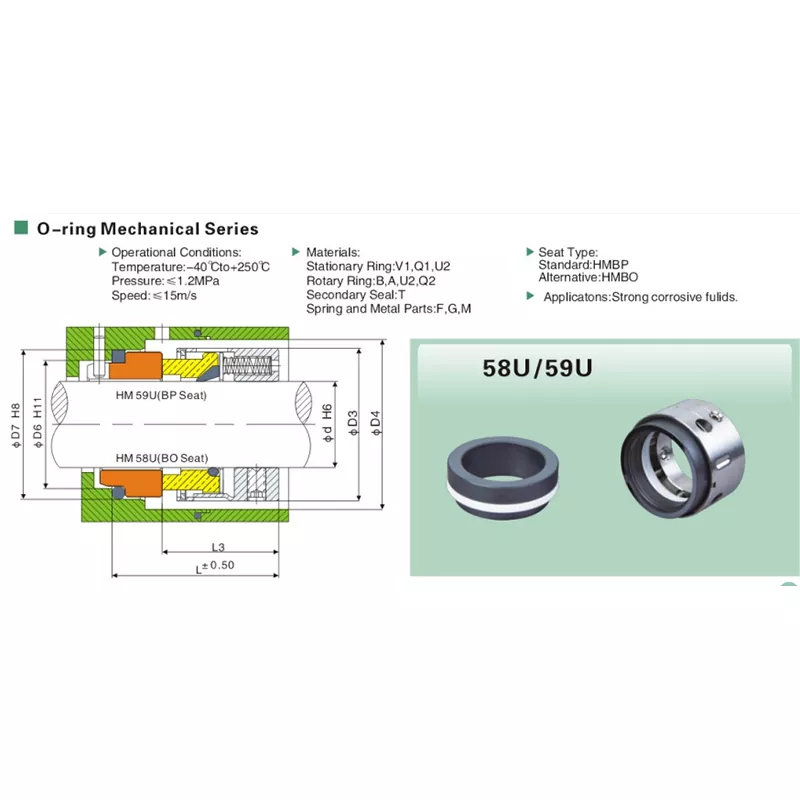
58U Chemical Pump Mechanical Seal
Qixing is a Durable 58U Chemical Pump Mechanical Seal manufacturer and supplier offering customized sealing solutions for global buyers. The 58U covers 14-100 mm shaft sizes, uses a BO stationary seat, and is listed for strong corrosive fluids from -40°C to +250°C.
Qixing offers in-stock Chemical Pump Mechanical Seals for global buyers. Buy wholesale or bulk at low price. Send inquiry now!