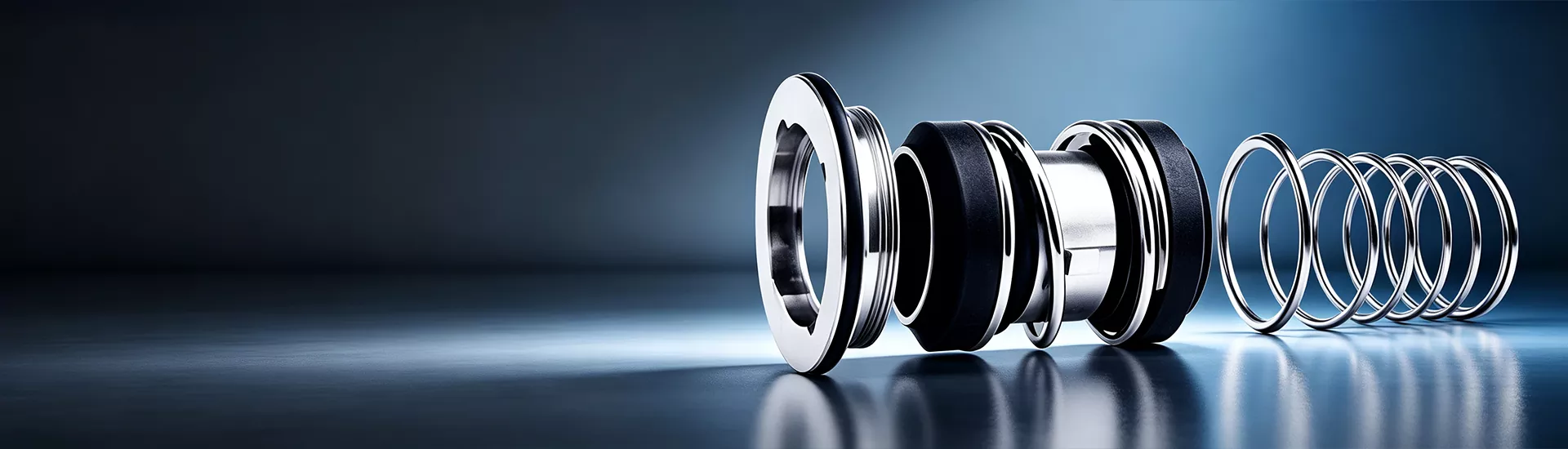
China Durable Rubber Bellow Mechanical Seals Supplier
In industrial pumping systems, sealing reliability directly impacts equipment uptime, maintenance costs, and environmental safety. Rubber Bellow Mechanical Seals have become a preferred choice for many engineers and maintenance professionals because they eliminate the need for a dynamic elastomer on the shaft or sleeve, reduce clogging risks, and handle a wide range of fluids. Qixing, a trusted manufacturer with decades of experience in mechanical seal production, designs rubber bellow mechanical seals to meet the rigorous demands of chemical processing, water treatment, food and beverage, HVAC, and marine applications.
Advantages
- No shaft fretting: The rubber bellows grips the shaft statically, preventing damage and simplifying sleeve replacement. This significantly reduces repair costs over the life of the pump.
- Self-adjusting axial movement: The bellows accommodates shaft play, thermal expansion, and misalignment without losing face contact. This makes the seal forgiving in real-world operating conditions.
- Clog-resistant design: The absence of a dynamic O-ring means fewer dead zones where particles can accumulate and cause seal hang-up. This is especially beneficial in slurry, wastewater, and crystallizing fluid services.
- Wide chemical compatibility: Multiple elastomer and face material options allow the seal to handle aggressive acids, alkalis, solvents, and oil-based fluids. Qixing helps customers select the optimal material pair for each application.
- Low maintenance: Qixing mechanical seals are designed for long, trouble-free operation, reducing downtime and total cost of ownership. The robust bellows construction resists cracks and tears under normal operating conditions.
- Compact installation: The one-piece bellows and spring assembly simplifies installation, reducing the risk of assembly errors. Shorter axial length also makes these seals suitable for pumps with limited stuffing box space.
- Cost-effective replacement: Compared to many cartridge seals, rubber bellow mechanical seals offer a lower initial purchase price while still delivering reliable performance in appropriate applications.
Typical Applications
Rubber bellow mechanical seals are used across a broad range of industries. Common equipment includes centrifugal pumps, rotary pumps, mixers, agitators, and compressors. The following list highlights some of the most frequent applications:
- Water and wastewater treatment: Circulating pumps, sludge transfer pumps, and effluent pumps. The clog-resistant design is particularly valuable in raw sewage and sludge services.
- Chemical processing: Acid transfer pumps, solvent pumps, and corrosive fluid handling. The correct elastomer and face material combination ensures compatibility with harsh media.
- HVAC systems: Chilled water pumps, hot water circulation pumps, and cooling tower pumps. EPDM bellows seals are often selected for hot water and glycol mixtures.
- Food and beverage: Sanitary pumps for liquid sugar, syrups, and clean-in-place (CIP) systems. Selected materials meet FDA requirements for incidental food contact.
- Marine and automotive: Engine water pumps, bilge pumps, and auxiliary cooling systems. The compact design fits tight spaces and withstands vibration.
- Pharmaceutical: Clean service pumps requiring minimal contamination risk. The static bellows design reduces crevices where bacteria can grow.
- Pulp and paper: Stock pumps, white water pumps, and liquor circulation pumps. Abrasion-resistant face materials handle fibrous and abrasive slurries.
Frequently Asked Questions
Q: What is the main difference between a rubber bellow mechanical seal and a conventional pusher seal?
A: The primary difference lies in the secondary sealing element. A rubber bellow mechanical seal uses a static rubber bellows that grips the shaft and flexes to maintain face contact, while a conventional pusher seal uses a dynamic O-ring that slides along the shaft to compensate for face wear and shaft movement. Because the rubber bellows does not slide, it eliminates shaft fretting, prevents seal hang-up caused by solids or sticky fluids, and performs better in applications with vibration or misalignment. The bellows also acts as a spring, reducing the number of components and simplifying installation. This design is especially beneficial for equipment where shaft runout or axial movement is a concern.
Q: What elastomer should I choose for my fluid?
A: The choice of bellows elastomer depends on the chemical composition, temperature, and concentration of the pumped fluid. NBR is a good general-purpose choice for water, oils, and many hydraulic fluids. EPDM offers excellent resistance to hot water, steam, and polar solvents like ketones and alcohols but is not compatible with petroleum-based oils or greases. FKM (Viton) provides the broadest chemical resistance, including acids, fuels, and chlorinated solvents, but it is more expensive. Neoprene is often selected for refrigeration systems using ammonia or Freon. Qixing provides a chemical compatibility database and expert technical support to help customers match the elastomer to their exact process conditions, reducing the risk of seal failure.
Q: How do I know when a rubber bellow mechanical seal needs replacement?
A: Common signs that a rubber bellow mechanical seal needs replacement include visible leakage from the seal chamber, an increase in pump vibration or noise, discoloration or cracking of the rubber bellows, and excessive wear on the seal faces. A small amount of vapor or moisture around the seal may be normal for some services, but continuous dripping or spraying indicates seal failure. If the pump is losing prime or drawing air, the seal faces may be worn beyond their limit. Regular inspection and monitoring of seal leakage rates can help predict when replacement is needed before a catastrophic failure occurs. Qixing recommends keeping a spare seal on hand and replacing the seal whenever the pump is disassembled for bearing or impeller maintenance.
Q: What is the maximum pressure for a rubber bellow mechanical seal?
A: Standard Qixing rubber bellow mechanical seals are rated for pressures up to 1.2 MPa (12 bar). However, the actual pressure capability depends on the seal size, bellows stiffness, face material combination, and whether the seal is balanced or unbalanced. Unbalanced rubber bellow seals are typically limited to lower pressures, while balanced designs can handle higher pressures with lower face loading and heat generation. For applications above 1.2 MPa, Qixing recommends upgrading to a metal bellows seal or a cartridge pusher seal designed for high-pressure service. Always check the pressure-temperature relationship of the seal materials because the maximum allowable pressure may decrease at elevated temperatures.
Quality Assurance and Custom Solutions from Qixing
Qixing operates a comprehensive quality management system that includes in-process inspection, dimensional verification, and pressure testing of every rubber bellow mechanical seal before shipment. Materials are traceable from certified suppliers, and all seals undergo a final visual and functional check to ensure they meet the specified performance requirements. The company’s engineering team works closely with pump manufacturers and end users to develop custom sealing solutions for unusual shaft sizes, aggressive media, or space-constrained installations. Whether you need a standard rubber bellow mechanical seal for a water pump or a specialized design for a chemical process, Qixing provides the technical support and production capacity to deliver reliable sealing performance over the long term.
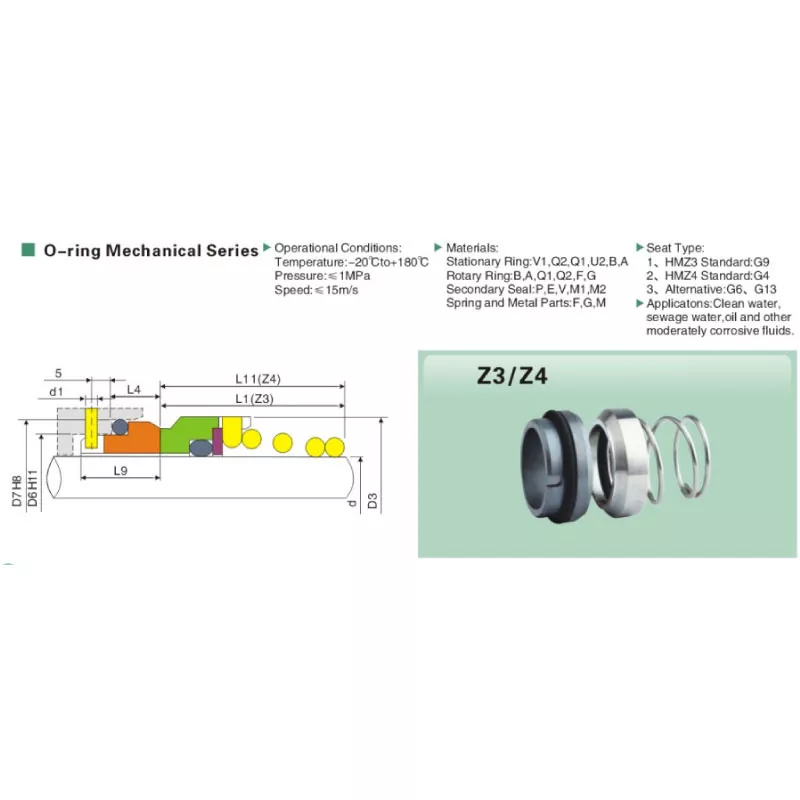
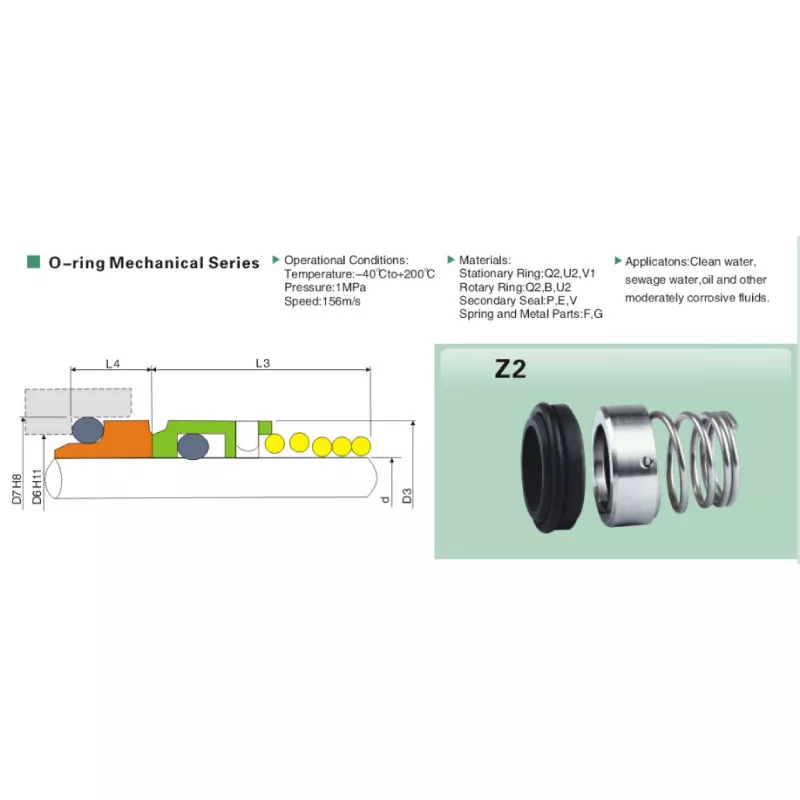
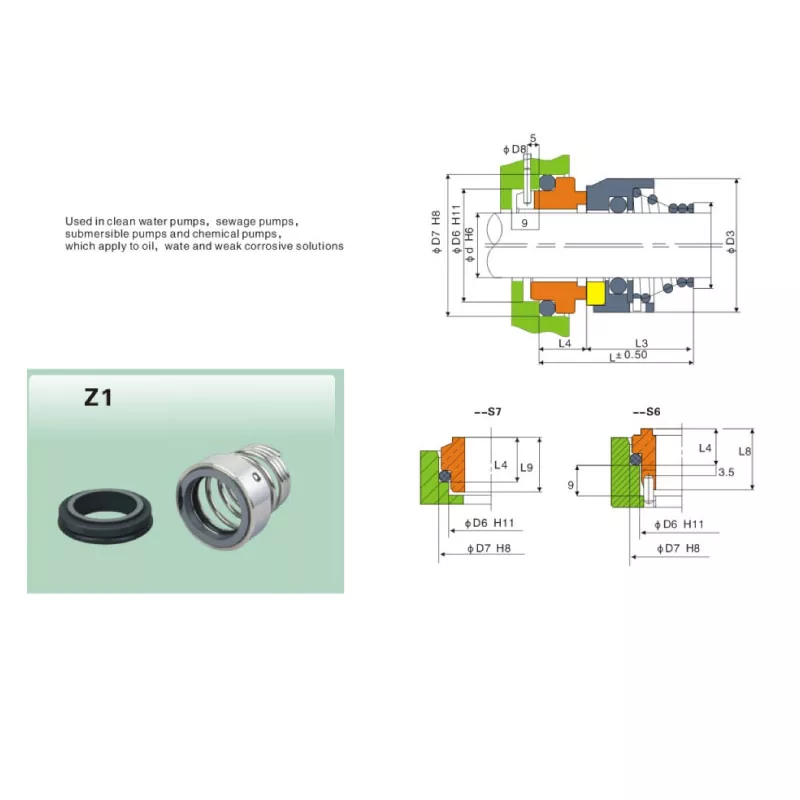
- View as
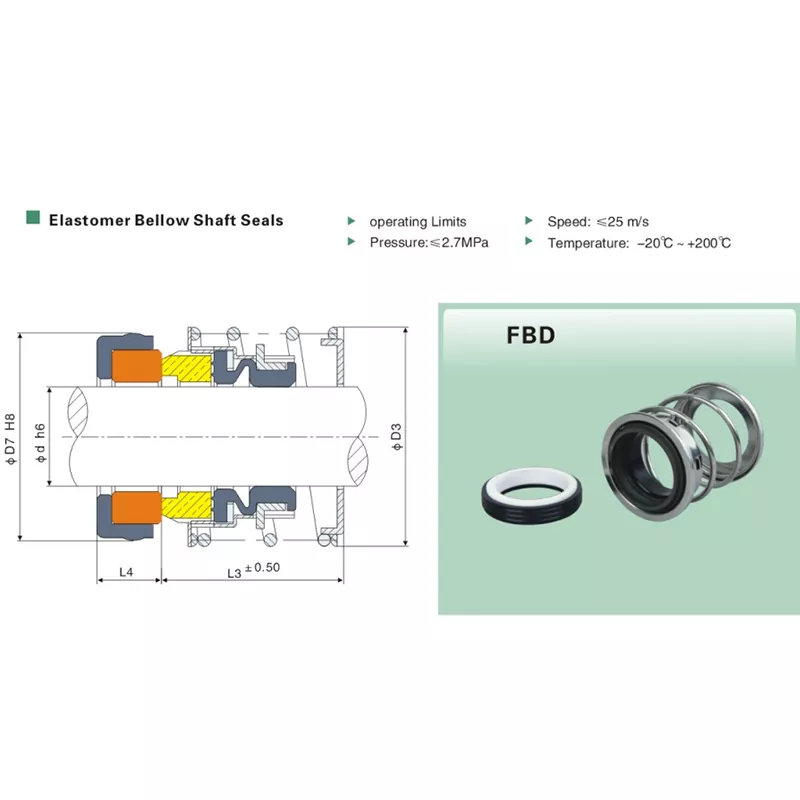
FBD Rubber Bellow Mechanical Seal
Qixing FBD Rubber Bellow Mechanical Seal is a single-spring elastomer bellow seal for pump and replacement applications. The FBD structure combines a rubber bellow with a single coil spring to reduce the risk of spring blockage and support stable axial compensation. It is available in a broad size range and can be configured with different seal-face, elastomer and metal materials for water, oil and comparable weakly corrosive fluid service.
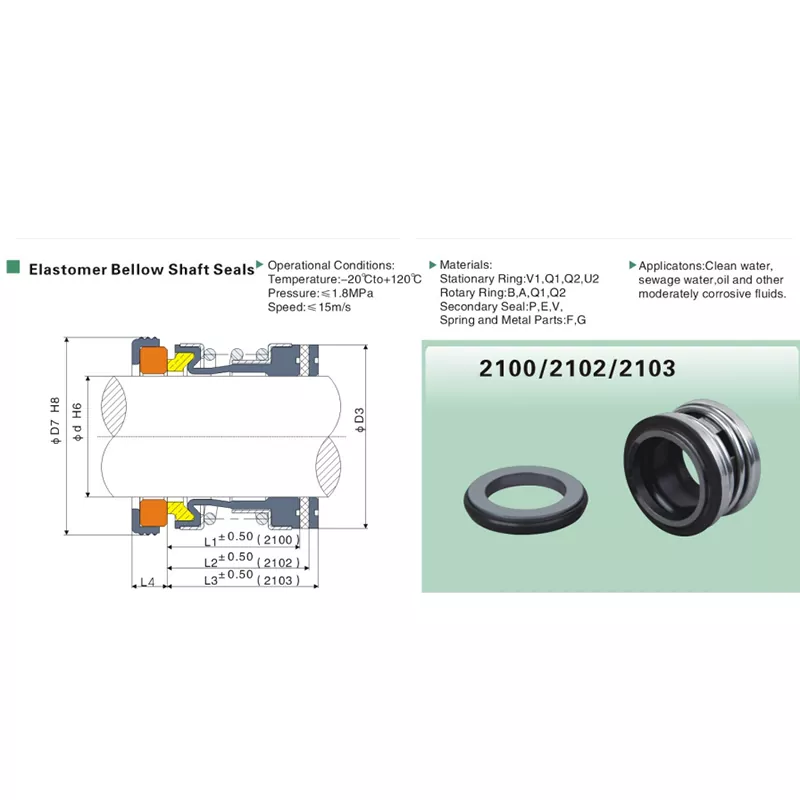
2100 Rubber Bellow Mechanical Seal
Most rubber bellow mechanical seals quit at 1.0 MPa pressure and 13 m/s shaft speed — the working ceiling of single-spring designs built for clean water and light circulation duty. Above that envelope, faces overheat, bellows extrude, and the seal fails inside months. The Qixing 2100 rubber bellow mechanical seal is engineered to operate where standard rubber bellow seals fail: 1.8 MPa, 15 m/s, in shaft sizes 10 mm to 100 mm.
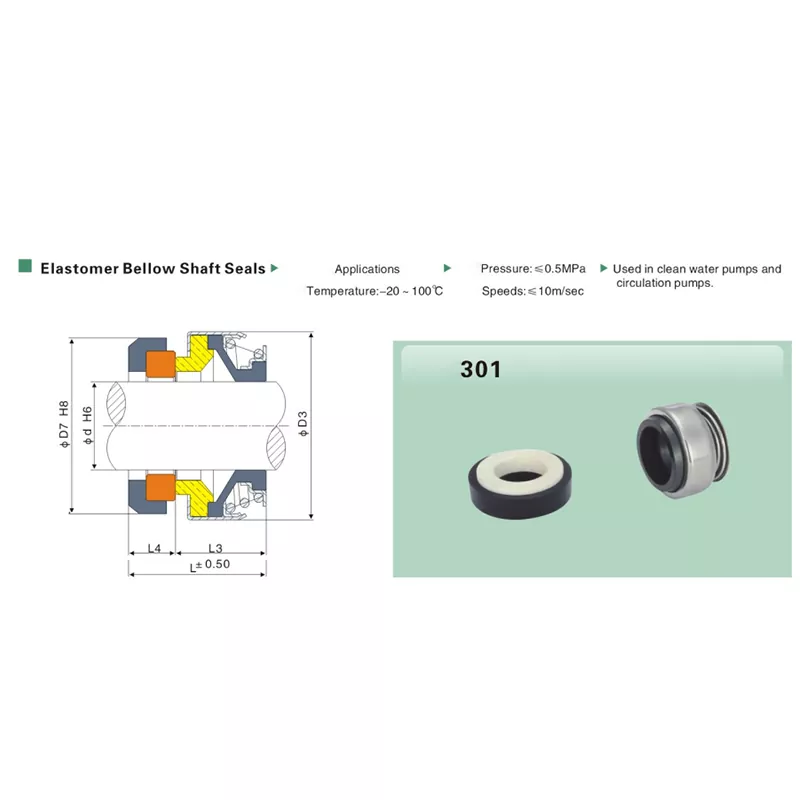
301 Rubber Bellow Mechanical Seal
Most mechanical seal catalogues jump from 12 mm to 14 mm to 16 mm shaft size and leave OEM pump designers stuck — the shaft they actually use is 11 mm, or 13 mm, or 17 mm, and no standard catalogue seal fits. The Qixing 301 rubber bellow mechanical seal is the answer to that mismatch: 38-plus standard model codes covering every integer millimetre from 6 mm to 70 mm, plus geometry-variant codes (P and L suffixes) for cases where the shaft size is right but the gland geometry differs.
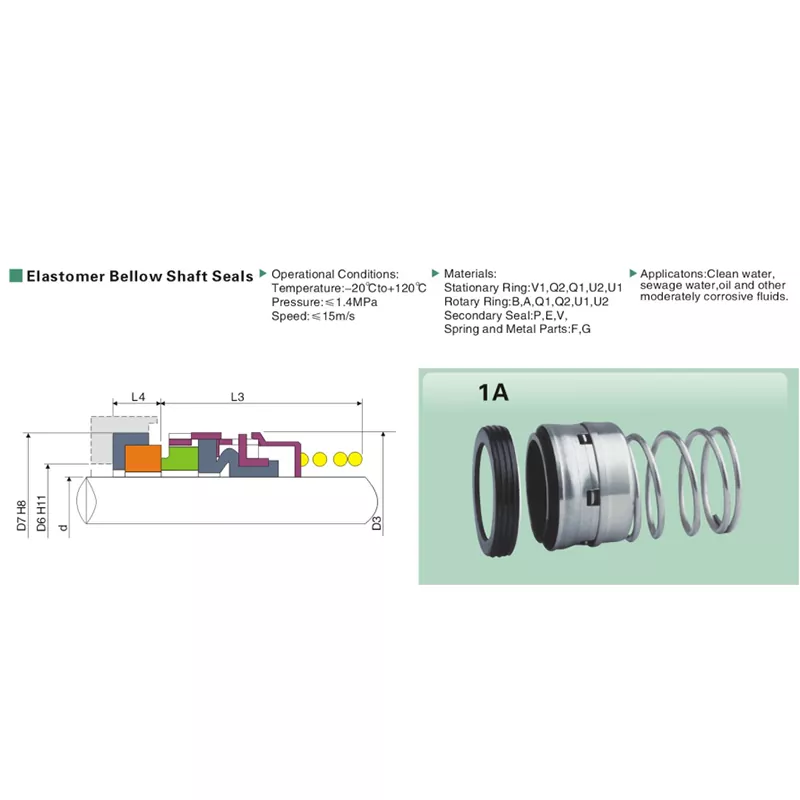
1A Rubber Bellow Mechanical Seal
Qixing is a professional 1A Rubber Bellow Mechanical Seal manufacturer and supplier offering customized industrial sealing solutions. The 1A elastomer bellow shaft seal is available in inch and metric size references, with an operating range of -20°C to +120°C, pressure up to 1.4 MPa and sliding speed up to 15 m/s.
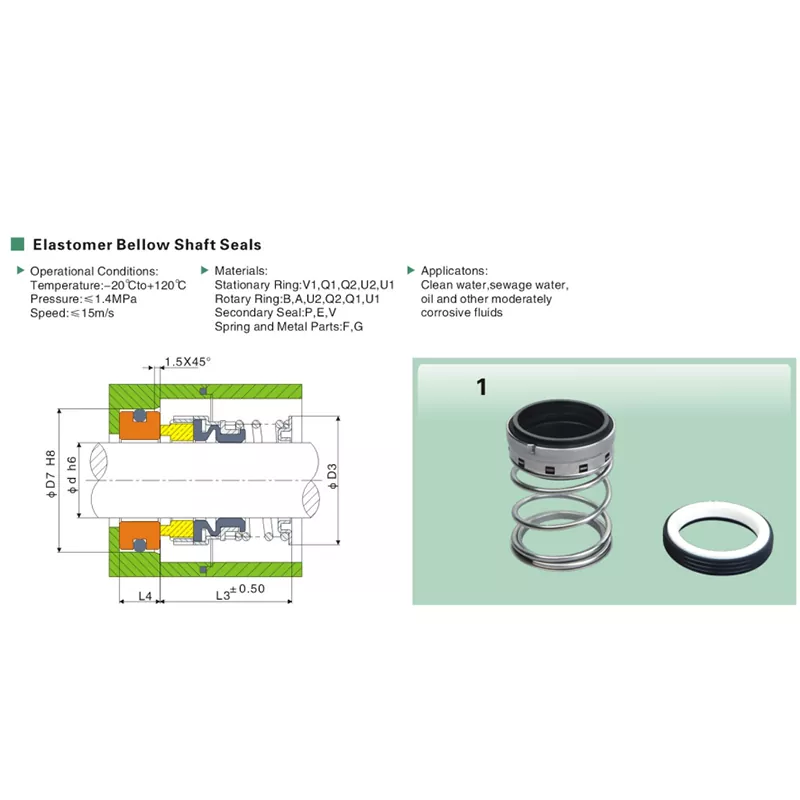
1 Rubber Bellow Mechanical Seal
Qixing is a professional 1 Rubber Bellow Mechanical Seal manufacturer and supplier offering customized sealing solutions. This elastomer bellow shaft seal is suitable for clean water, sewage water, oil and other moderately corrosive fluids, with an operating range of -20°C to +120°C, pressure up to 1.4 MPa and sliding speed up to 15 m/s.
Qixing offers in-stock Rubber Bellow Mechanical Seals for global buyers. Buy wholesale or bulk at low price. Send inquiry now!