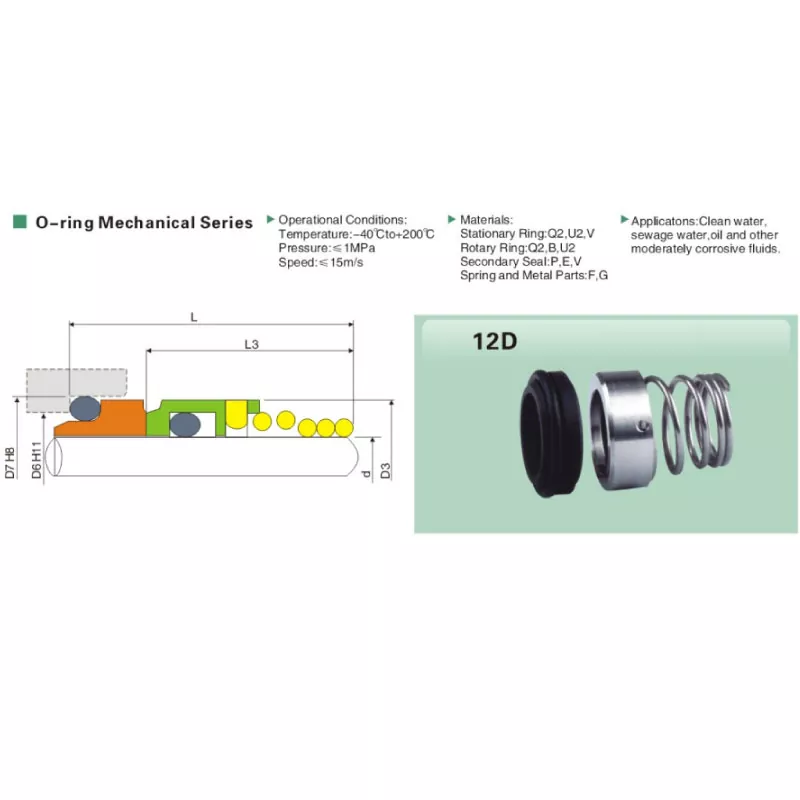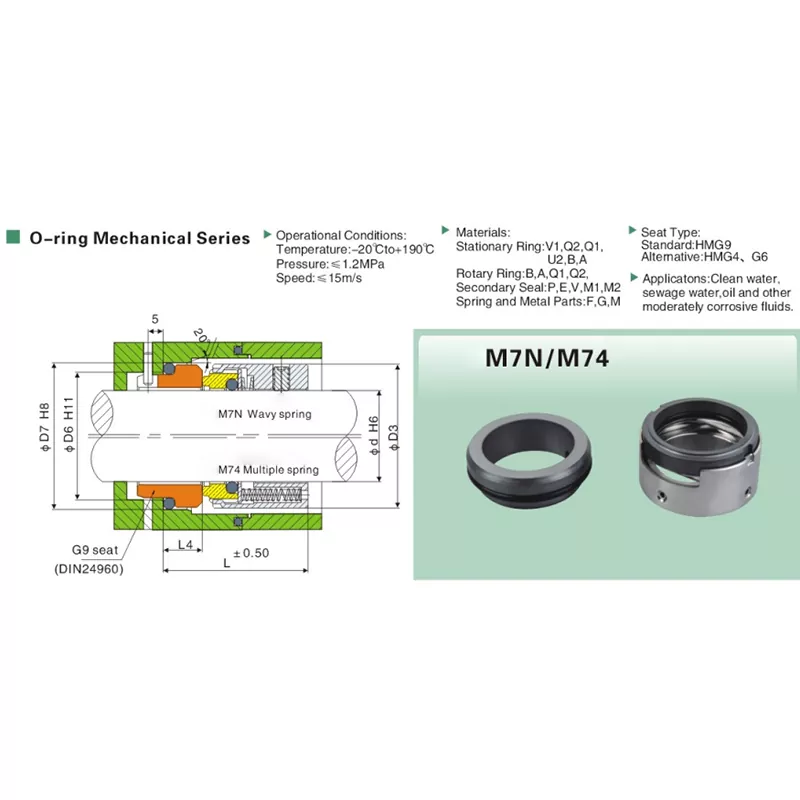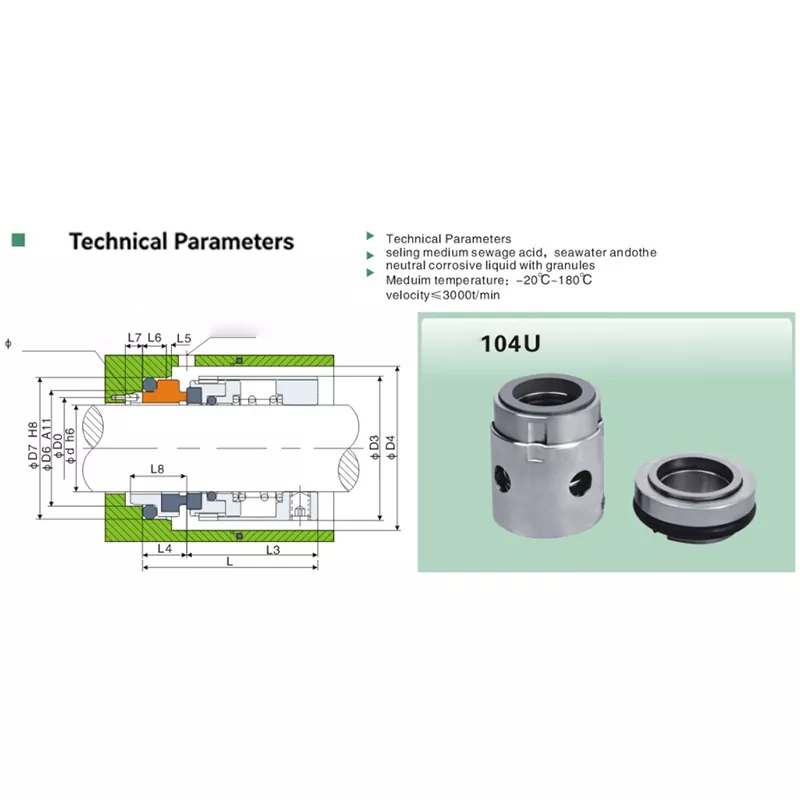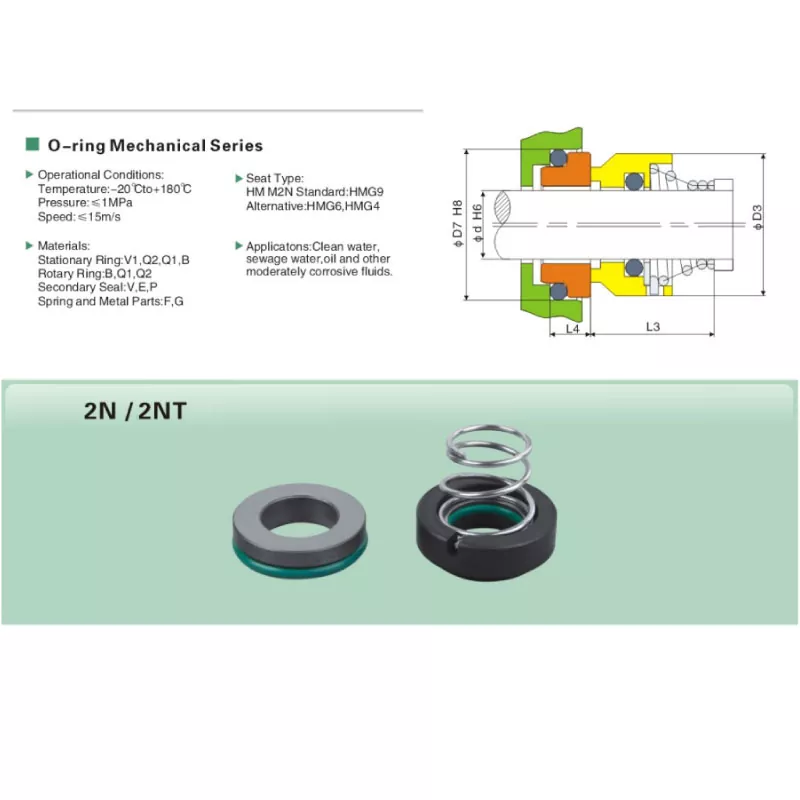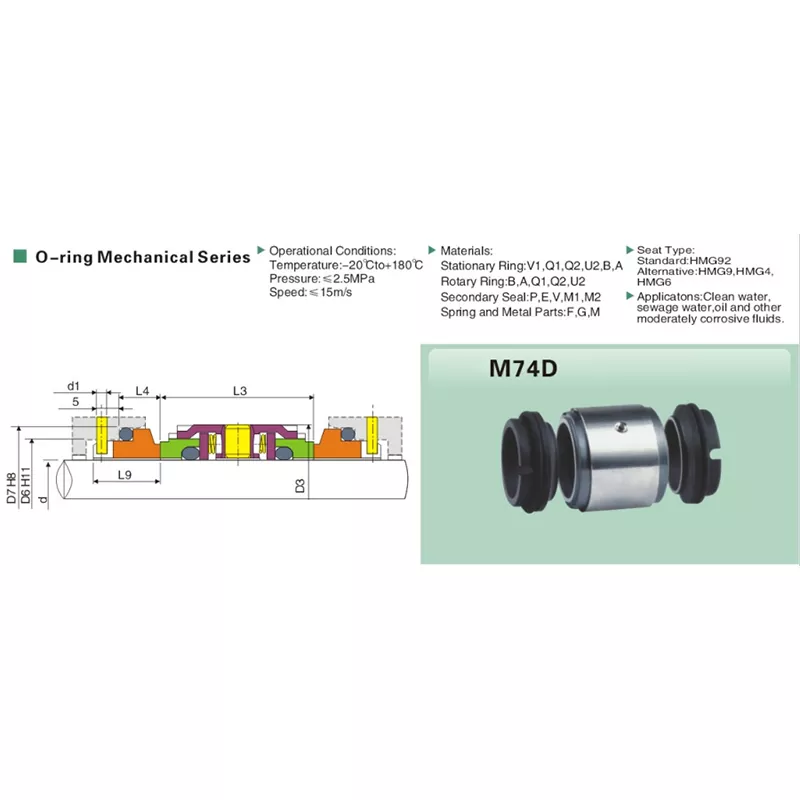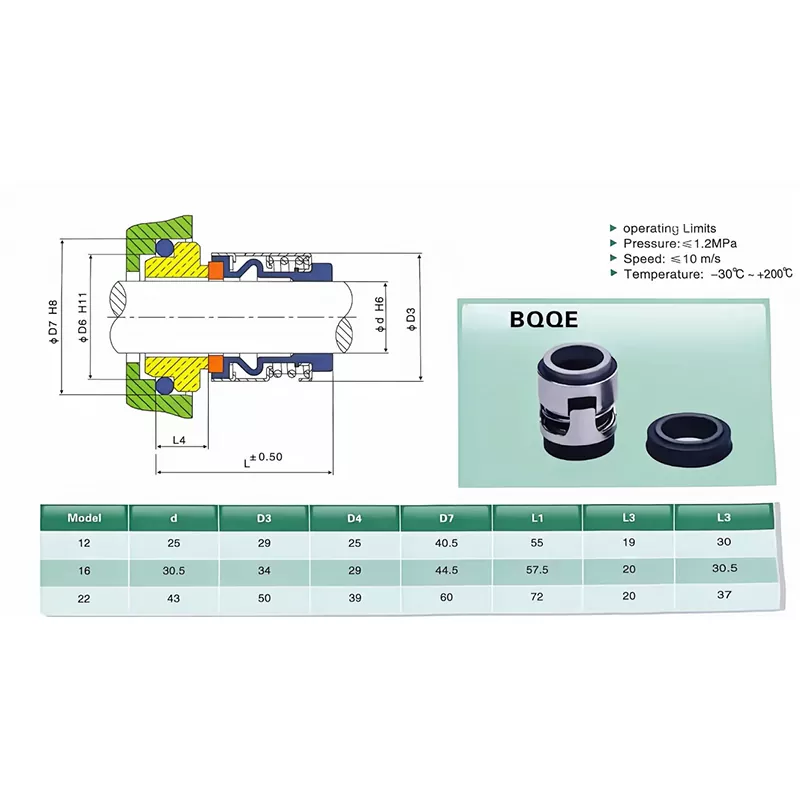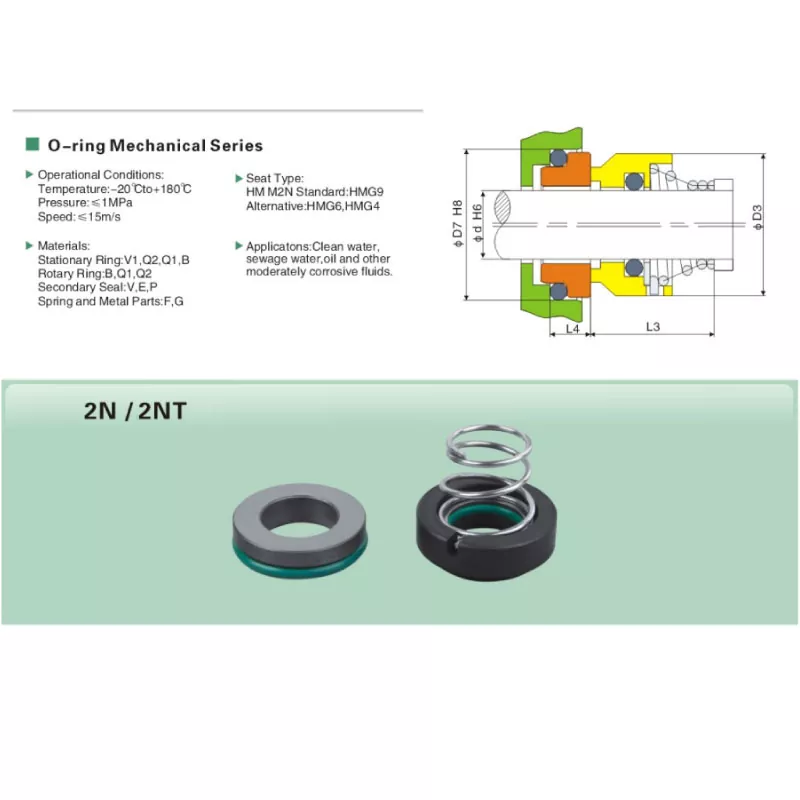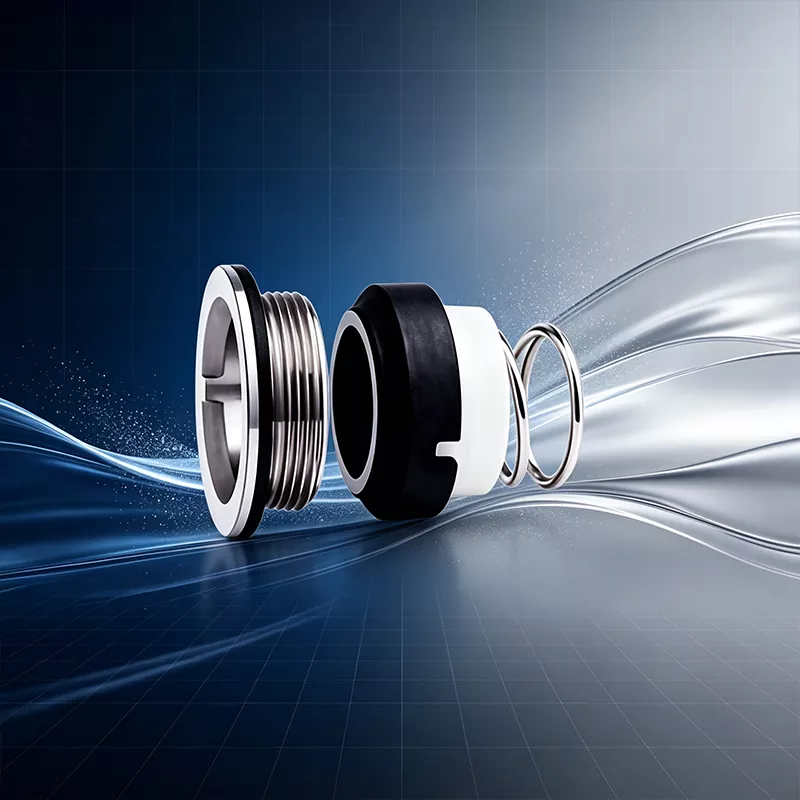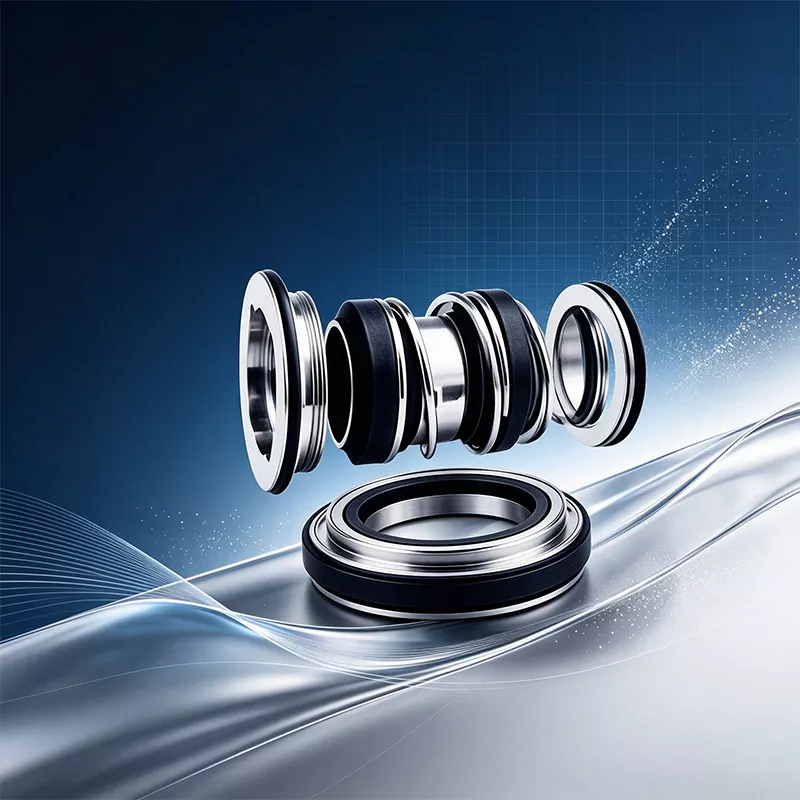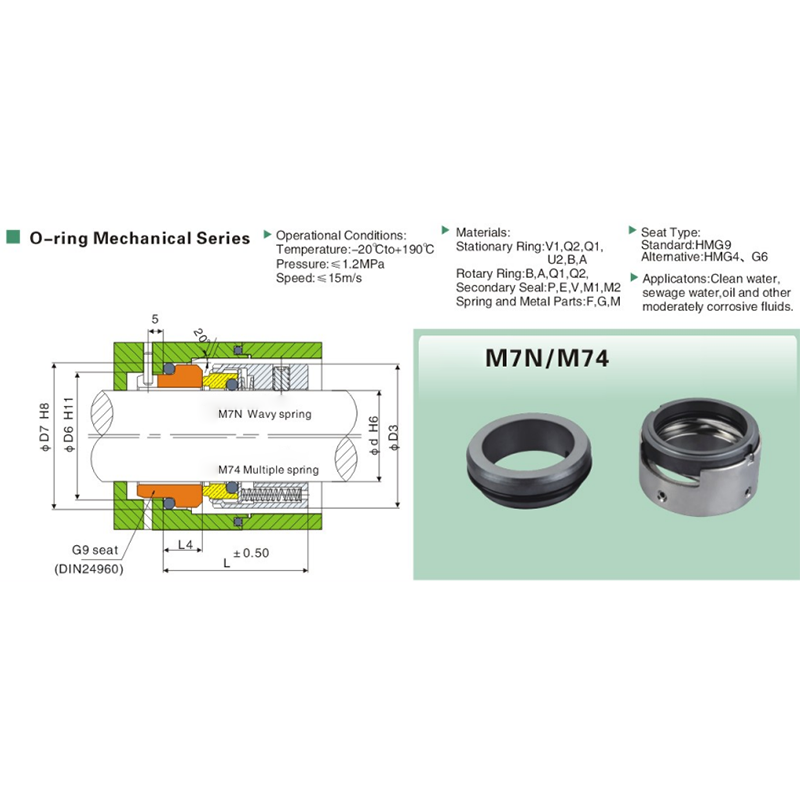
Qixing’s 2NT Single Spring Mechanical Seal is designed for compact pump applications where dependable sealing, practical replacement, and flexible material selection are essential. With a 10–28 mm shaft size range, pressure capability up to 1 MPa, sliding speed up to 15 m/s, and multiple face, elastomer, seat, and metal-material options, this mechanical seal can be configured for water, sewage, oil, and moderately corrosive fluid services.
A mechanical seal directly influences pump reliability because it helps prevent process fluid from escaping along the rotating shaft. The 2NT Single Spring Mechanical Seal uses a compact single-end structure with O-ring secondary sealing and is intended for smaller pump shafts and applications with limited installation space. Its configuration options include silicon carbide and tungsten carbide seal faces, carbon, silicon carbide, or tungsten carbide stationary-seat materials, NBR, EPDM, or FKM/Viton elastomers, and SS304 or SS316 spring and metal components. Understanding shaft size, pressure, temperature, speed, fluid composition, seat type, and material compatibility is therefore essential before selecting a seal.
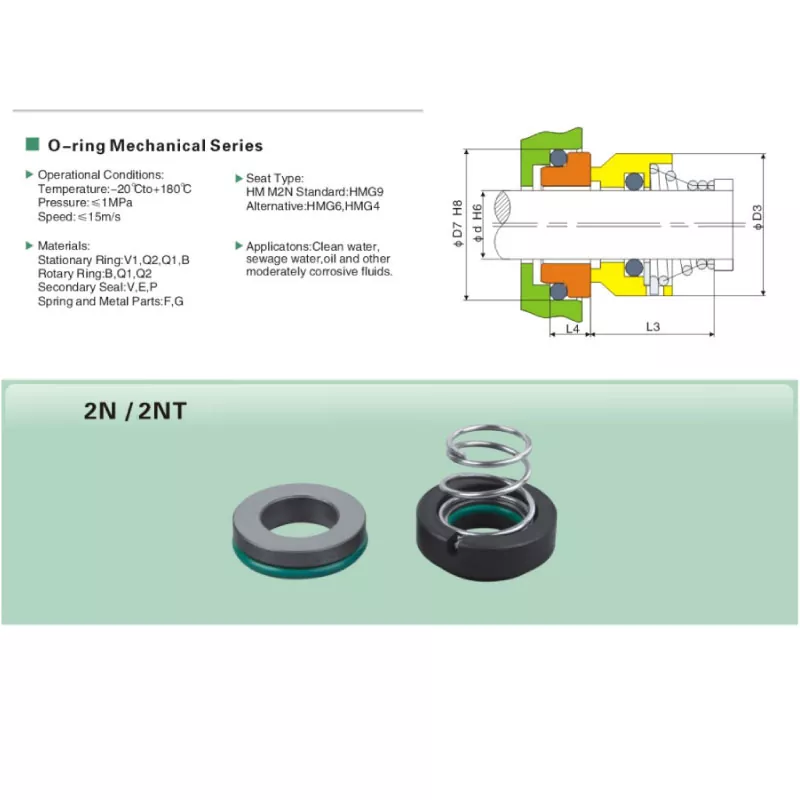
Table of Contents
- What Is a 2NT Single Spring Mechanical Seal?
- What Are the Key Features of the 2NT Seal?
- What Are the Technical Specifications?
- How Should Seal Materials Be Selected?
- Where Can the 2NT Seal Be Used?
- How Do You Select the Right 2NT Seal?
- What Should Buyers Check During Replacement?
- Why Consider Qixing for 2NT Mechanical Seal Requirements?
- Frequently Asked Questions About 2NT Mechanical Seals
- Conclusion
What Is a 2NT Single Spring Mechanical Seal?
A 2NT Single Spring Mechanical Seal is a compact single-end mechanical seal designed for pump shafts ranging from 10 mm to 28 mm. Its construction incorporates a single spring and O-ring secondary sealing arrangement, providing a practical solution for equipment where installation dimensions and replacement compatibility are important.
The sealing principle relies on controlled contact between the rotating and stationary sealing faces. When correctly selected and installed, these mating faces help minimize fluid leakage while allowing the pump shaft to rotate. The secondary O-ring provides additional sealing around the relevant components and accommodates the compact structure of the assembly.
For industrial buyers, the model name alone should not determine compatibility. Shaft diameter, seat configuration, fluid characteristics, temperature, pressure, speed, and material selection all influence whether a particular configuration is suitable. This makes application-based selection especially important for replacement projects.
What Are the Key Features of the 2NT Seal?
The 2NT design combines a compact structure with several configuration choices, allowing it to serve different pump operating conditions. Its principal characteristics include:
- Compact single-end structure: Suitable for applications where available installation space is limited.
- 10–28 mm shaft range: Designed for smaller pump shafts within the specified dimensional range.
- O-ring secondary sealing: Provides secondary sealing within the mechanical seal assembly.
- Flexible stationary seats: G9 is the standard seat, while G6 and G4 alternatives are available.
- Multiple face materials: Silicon carbide and tungsten carbide options can be selected according to application requirements.
- Different elastomers: NBR, EPDM, and FKM/Viton options support different fluid and temperature conditions.
- Stainless-steel components: SS304 and SS316 options are available for springs and metal parts.
- Broad application potential: Suitable for clean water, sewage water, oil, and selected moderately corrosive fluids when material compatibility is confirmed.
These options make the seal useful for both original equipment requirements and replacement projects. However, the final configuration should always be matched to actual operating conditions rather than selected solely by appearance or model number.
What Are the Technical Specifications?
The following specifications provide a practical reference when evaluating the 2NT design for a pump application:
| Item | Specification |
|---|---|
| Product | 2NT Single Spring Mechanical Seal |
| Seal Type | O-ring Mechanical Seal |
| Structure | Single End |
| Shaft Size | 10–28 mm |
| Temperature | -20°C to +180°C, depending on elastomer |
| Maximum Pressure | Up to 1 MPa |
| Maximum Sliding Speed | Up to 15 m/s |
| Standard Stationary Seat | G9 |
| Alternative Seats | G6 / G4 |
| Seal Face Options | Silicon Carbide / Tungsten Carbide |
| Seat Material Options | Carbon / Silicon Carbide / Tungsten Carbide |
| Elastomer Options | NBR / EPDM / FKM (Viton) |
| Spring Options | SS304 / SS316 |
| Metal Part Options | SS304 / SS316 |
| Typical Media | Clean water / sewage water / oil / moderately corrosive fluids |
These figures should be treated as selection references rather than substitutes for application verification. Actual service conditions, fluid composition, material compatibility, and equipment dimensions should be reviewed before production or installation.
How Should Seal Materials Be Selected?
Material selection is one of the most important parts of mechanical seal specification. The same seal structure may require different materials depending on the pumped medium and operating environment.
Seal Face Materials
Silicon carbide and tungsten carbide are available as seal-face options. These materials can be considered when the application requires specific wear, friction, or chemical-resistance characteristics. The appropriate combination depends on the actual operating medium and equipment conditions.
Elastomer Selection
The available elastomers include NBR, EPDM, and FKM/Viton. Because elastomers respond differently to fluids and temperatures, selecting the correct material requires information about the pumped liquid and operating temperature.
Metal Components
SS304 and SS316 options are available for the spring and other metal parts. When the equipment operates in a more demanding environment, the actual fluid composition and corrosion conditions should be considered before choosing the metal configuration.
For hot water, oil, chemicals, or mixed fluids, providing the real fluid composition and operating temperature to the supplier can significantly improve configuration accuracy.
Where Can the 2NT Seal Be Used?
The compact size and configurable materials of the 2NT make it applicable to various pump systems within its operating limits. Typical applications include:
- Water circulation and transfer pumps
- General industrial water pumps
- Sewage and wastewater pumping equipment
- Oil-handling pump applications within the specified operating range
- Pump systems handling moderately corrosive fluids after compatibility evaluation
- Small-shaft pump replacement projects
- Industrial equipment where installation space is restricted
For wastewater and sewage applications, the actual fluid conditions should be reviewed carefully. Suspended solids, unusual chemicals, elevated temperatures, or other special operating factors can affect seal selection and service life.
How Do You Select the Right 2NT Seal?
Rather than choosing a seal based only on a catalog model number, buyers should establish a complete application profile. The following information can help a manufacturer confirm the correct configuration:
- Measure the shaft diameter. Confirm that the shaft falls within the 10–28 mm range.
- Identify the stationary seat. Check whether G9, G6, or G4 is required.
- Define the working medium. Specify water, sewage, oil, chemical solution, or another fluid.
- Confirm temperature. Record both normal and maximum operating temperatures.
- Confirm pressure. Ensure the operating pressure remains within the applicable limit.
- Check shaft or sliding speed. The specified maximum sliding speed is 15 m/s.
- Determine material requirements. Consider seal faces, seat material, elastomer, spring, and metal components.
- Provide existing-seal information. Photos, drawings, dimensions, or a physical sample can assist replacement matching.
This structured approach reduces the risk of ordering a visually similar seal that does not match the pump's installation dimensions or operating environment.
What Should Buyers Check During Replacement?
Mechanical seal replacement is not simply a matter of finding a component with the same external appearance. Two seals that look similar may have different seat dimensions, sealing-face materials, elastomers, or installation requirements.
For a replacement project, compare the existing seal assembly carefully. Important information includes the shaft diameter, stationary seat configuration, seal dimensions, rotating assembly, spring arrangement, fluid, temperature, pressure, and operating speed.
If the original marking is incomplete, clear photographs can be particularly useful. Ideally, provide images of both the rotating seal assembly and stationary seat, together with the shaft diameter and pump operating data. A sample or technical drawing can provide even more reliable information for replacement matching.
For procurement teams, this process also helps avoid unnecessary trial orders and reduces the possibility of receiving a mechanically compatible-looking component that is unsuitable for the actual application.
Why Consider Qixing for 2NT Mechanical Seal Requirements?
Qixing is the mechanical seal brand of Ningbo Yade Fluid Connector Co., Ltd. Its product range includes single spring mechanical seals, multi spring mechanical seals, cartridge mechanical seals, chemical pump mechanical seals, rubber bellow mechanical seals, sanitary pump mechanical seals, and replacement mechanical seals.
For 2NT Single Spring Mechanical Seal requirements, Qixing can review standard configurations as well as OEM and replacement projects according to dimensions, samples, drawings, material requirements, and operating conditions. This application-oriented approach is useful when buyers know the pump and working conditions but are uncertain about the exact seat or material combination.
Buyers can also explore the single spring mechanical seal range to compare related configurations and identify an appropriate starting point for their project.
For an inquiry, it is useful to prepare the shaft size, working medium, temperature, pressure, speed, preferred materials, and available drawings or photographs. Providing complete technical information allows the manufacturer to evaluate the application before quotation and production.
Frequently Asked Questions About 2NT Mechanical Seals
What shaft sizes are available for the 2NT Single Spring Mechanical Seal?
The 2NT series covers shaft sizes from 10 mm to 28 mm. The exact seal configuration should still be matched with the pump shaft and installation dimensions.
What is the operating temperature range?
The specified operating temperature range is -20°C to +180°C. The practical temperature capability depends on the selected elastomer and the actual pumped medium.
What is the maximum operating pressure?
The maximum operating pressure is up to 1 MPa under the applicable operating conditions.
What is the maximum sliding speed?
The specified maximum sliding speed is up to 15 m/s. Actual suitability should be evaluated together with the pump design and other operating parameters.
Which stationary seat is standard?
G9 is the standard stationary seat. G6 and G4 are available as alternative seat configurations.
Which elastomer options are available?
NBR, EPDM, and FKM/Viton are available. The appropriate elastomer should be selected according to the pumped fluid, temperature, and application conditions.
Can the 2NT seal be used for sewage water?
Yes. Sewage water is within the typical application range. However, applications containing significant solids, unusual chemicals, or special operating conditions should be reviewed before final material selection.
How can I order a replacement 2NT seal?
Provide the shaft diameter, stationary seat type, operating medium, temperature, pressure, and speed. Photos, drawings, dimensions, or a sample of the existing seal can also help with replacement matching.
Can Qixing support OEM or customized requirements?
Yes. Qixing can review OEM and replacement requirements based on samples, drawings, dimensions, material specifications, and operating data.
Conclusion
The 2NT Single Spring Mechanical Seal provides a compact sealing solution for pump applications requiring a 10–28 mm shaft range and configurable sealing materials. Its G9 standard seat, G6/G4 alternatives, multiple seal-face materials, elastomer options, and SS304/SS316 components allow the configuration to be matched to different water, sewage, oil, and moderately corrosive fluid applications within the specified operating limits. For replacement or OEM projects, accurate shaft measurements, seat information, fluid data, temperature, pressure, and speed should be confirmed before ordering. If you are sourcing a reliable mechanical seal configuration for your pump system, contact us with your drawings, sample details, operating conditions, or replacement requirements to discuss the suitable 2NT configuration with Qixing.