How Can a W01 Single Spring Mechanical Seal Improve Pump Reliability and Deliver Consistent Sealing Performance
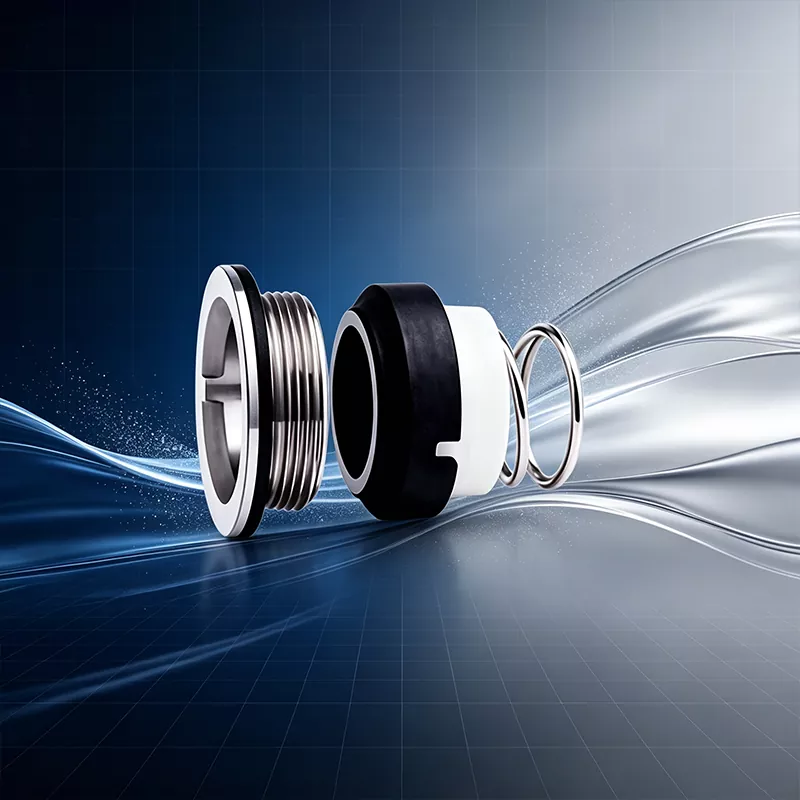
In industrial pumping systems, selecting the right mechanical seal is essential for preventing fluid leakage, maintaining operational efficiency, and reducing maintenance costs. Yade, through its Qixing mechanical seal brand, provides the W01 Single Spring Mechanical Seal as a compact and versatile sealing solution for centrifugal pumps and various industrial fluid-handling applications. Featuring a space-saving wave-spring design, multiple material combinations, and a shaft size range from 15.8 mm to 75 mm, this mechanical seal is designed to meet different equipment requirements while providing reliable sealing performance under properly selected operating conditions.
The W01 Single Spring Mechanical Seal is a practical solution for industrial pump applications that require compact installation dimensions, dependable face loading, and flexible material selection. Its wave-spring arrangement helps reduce the overall working length while maintaining the axial force required between the rotating and stationary sealing faces. With operating temperatures ranging from -40°C to +200°C, pressure ratings up to 0.8 MPa, and sliding speeds up to 18 m/s, the W01 series supports a variety of water, oil, and compatible industrial fluid applications. This article explores its working principle, technical specifications, material options, applications, dimensional requirements, and important considerations when selecting a replacement seal.
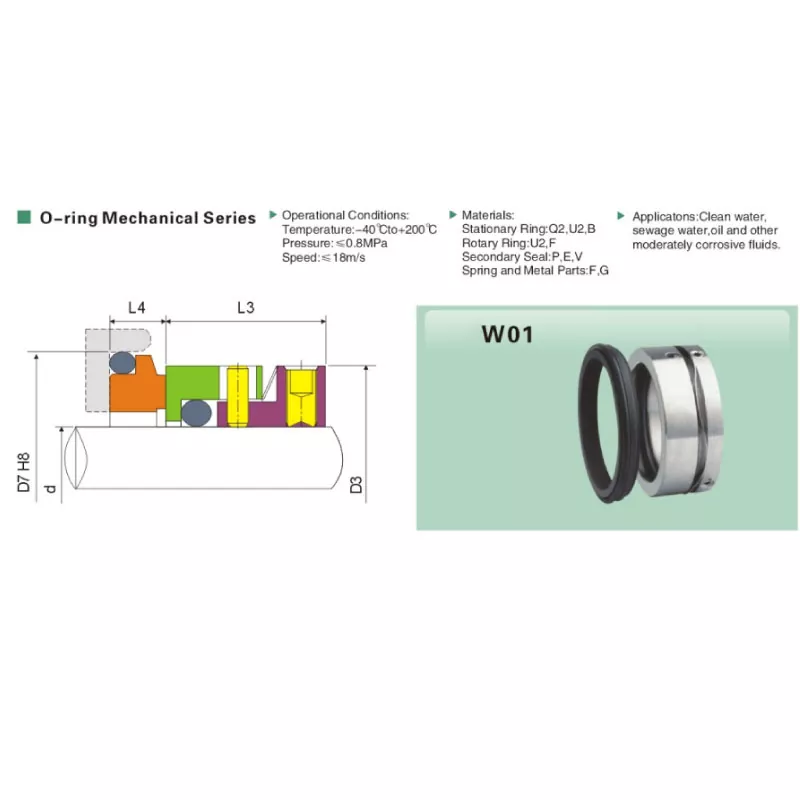
Table of Contents
- 1. What Is a W01 Single Spring Mechanical Seal?
- 2. How Does the W01 Wave-Spring Design Work?
- 3. Technical Specifications and Performance Parameters
- 4. How to Choose the Right Mechanical Seal Materials
- 5. Industrial Applications of the W01 Mechanical Seal
- 6. Dimensional Matching and Replacement Considerations
- 7. Installation and Maintenance Recommendations
- 8. Why Choose Yade for W01 Mechanical Seals?
- 9. Frequently Asked Questions
- 10. Conclusion
1. What Is a W01 Single Spring Mechanical Seal?
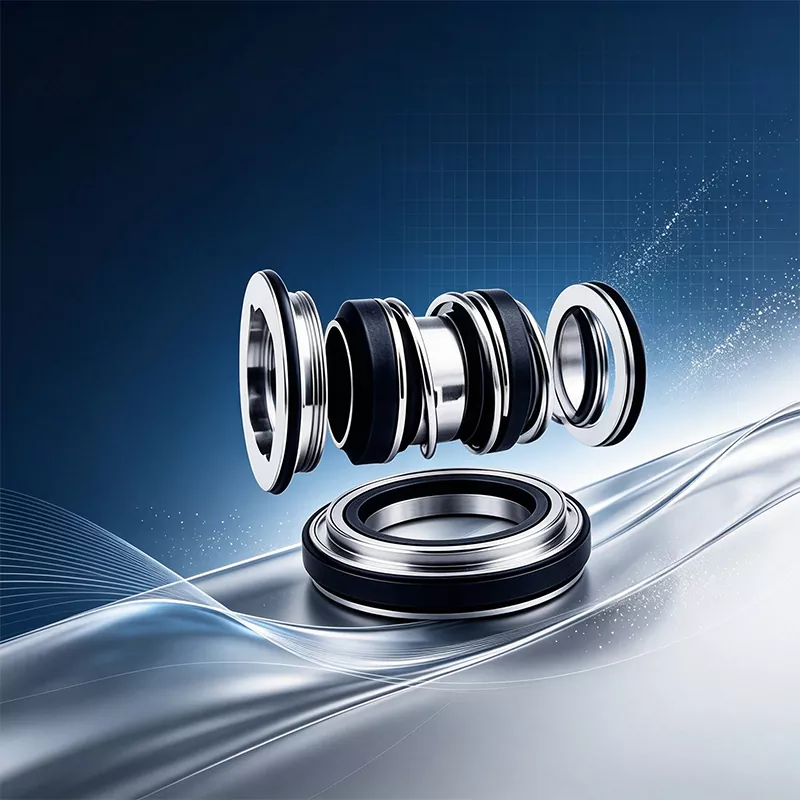
A W01 Single Spring Mechanical Seal is a mechanical sealing component designed to control fluid leakage between a rotating pump shaft and the stationary pump housing. It uses a single wave-spring arrangement to generate the axial force needed to maintain contact between two precision sealing surfaces.
Unlike traditional packing seals, which may require continuous adjustment and allow controlled leakage, mechanical seals use closely matched sealing faces to create an effective barrier against fluid escape. This structure helps reduce leakage, friction-related losses, and routine maintenance requirements.
The W01 series is particularly suitable for equipment where installation space is limited. Its compact structure allows it to fit a variety of pump configurations, making it a practical choice for both original equipment manufacturing and replacement applications.
Key product characteristics include:
- Compact construction: The wave-spring arrangement helps reduce the axial working length.
- Flexible shaft compatibility: Available for shaft diameters ranging from 15.8 mm to 75 mm.
- Multiple material options: Different sealing faces, stationary seats, elastomers, and metal components can be selected.
- Wide operating temperature range: Designed for applications from -40°C to +200°C, depending on material selection.
- Replacement flexibility: Suitable for dimensional cross-reference evaluation in various pump systems.
For industrial buyers, the main advantage is the combination of compact installation geometry and adaptable material configurations. However, selecting the correct model requires checking the complete installation dimensions rather than relying solely on shaft diameter.
2. How Does the W01 Wave-Spring Design Work?
The working principle of a mechanical seal is based on maintaining a controlled contact relationship between a rotating sealing face and a stationary sealing seat.
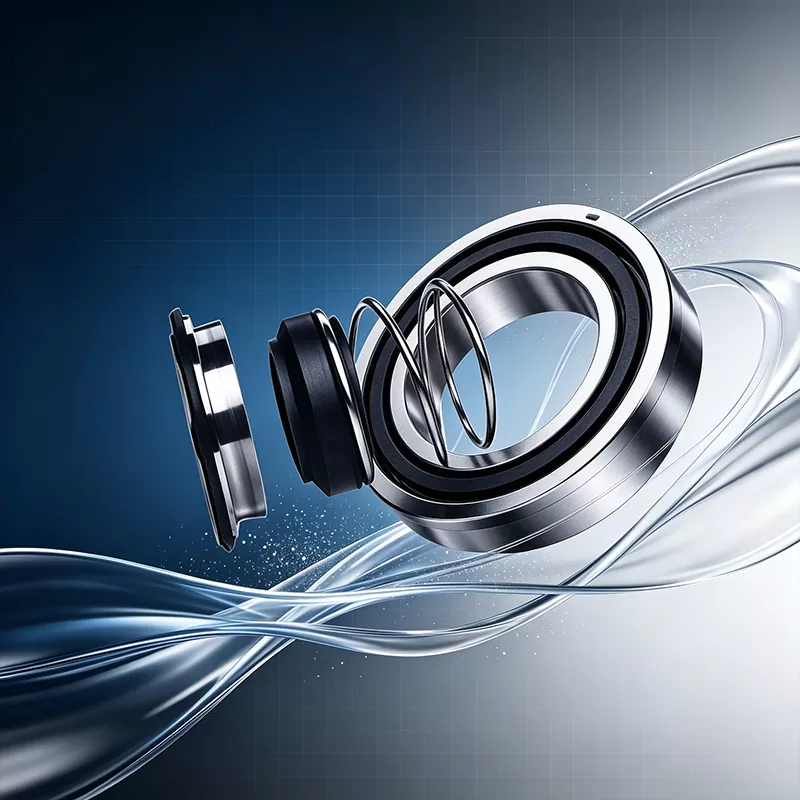
In the W01 design, the wave spring provides the axial loading force that helps keep these two surfaces in contact. As the pump shaft rotates, the rotating component moves with the shaft, while the stationary seat remains fixed inside the pump housing.
A thin fluid film may form between the sealing faces during operation. This film helps reduce friction and wear while maintaining the sealing function.
Key Components of the W01 Structure
- Rotating face: Rotates together with the pump shaft and provides one side of the sealing interface.
- Stationary seat: Remains fixed within the equipment and forms the opposing sealing surface.
- Wave spring: Supplies the axial force required to maintain sealing-face contact.
- Secondary seals: Elastomer components help prevent leakage around the sealing assembly.
- Metal components: Provide structural support and positioning for the complete seal assembly.
The compact wave-spring structure is particularly useful when conventional spring arrangements cannot easily fit into the available installation space. It also provides a practical configuration for equipment manufacturers and maintenance teams working with established pump designs.
Nevertheless, proper operation depends on correct installation, shaft alignment, suitable material selection, and compliance with the specified operating limits.
3. Technical Specifications and Performance Parameters
Understanding the technical specifications of a W01 Single Spring Mechanical Seal is essential before purchasing or replacing an existing component. Different pump systems operate under different pressures, temperatures, and rotational conditions, so every parameter should be evaluated against the actual application.
W01 Mechanical Seal Technical Specifications
| Parameter | Specification |
|---|---|
| Product Name | W01 Single Spring Mechanical Seal |
| Spring Design | Wave-spring arrangement |
| Shaft Size | 15.8 mm - 75 mm |
| Operating Temperature | -40°C to +200°C |
| Maximum Operating Pressure | 0.8 MPa |
| Maximum Sliding Speed | 18 m/s |
| Rotating Seal Face | Silicon Carbide / Tungsten Carbide |
| Stationary Seat | Carbon / Silicon Carbide / Tungsten Carbide |
| Elastomer Options | NBR / EPDM / FKM (Viton) |
| Spring Materials | SS304 / SS316 |
| Metal Parts | SS304 / SS316 |
Important: These are the listed product performance limits, not a guarantee that every material combination can operate simultaneously at the maximum temperature, pressure, and sliding speed. Actual operating suitability depends on the selected materials, fluid characteristics, equipment design, and working conditions.
Why Are These Parameters Important?
Each technical parameter directly influences the compatibility and expected service performance of the mechanical seal.
- Shaft diameter: Determines whether the seal can be installed correctly on the pump shaft.
- Temperature: Influences elastomer stability, thermal expansion, and sealing-face performance.
- Pressure: Determines the mechanical loading conditions experienced by the sealing assembly.
- Sliding speed: Affects friction, heat generation, and wear at the sealing interface.
- Material compatibility: Helps prevent chemical degradation, corrosion, and premature component failure.
4. How to Choose the Right Mechanical Seal Materials
Material selection is one of the most important factors when purchasing a W01 Single Spring Mechanical Seal. Even when two seals share identical dimensions, different material combinations can produce significantly different results under the same operating conditions.
4.1 Seal Face Materials
The rotating seal face is available in silicon carbide (SiC) and tungsten carbide (TC). Both materials are commonly used in industrial mechanical sealing applications.
- Silicon Carbide (SiC): Offers high hardness, wear resistance, and chemical compatibility in many industrial environments. It is frequently considered for applications involving demanding fluid conditions.
- Tungsten Carbide (TC): Provides high mechanical strength and excellent wear resistance, making it an option for applications where mechanical durability is important.
4.2 Stationary Seat Materials
The stationary seat can be configured with carbon, silicon carbide, or tungsten carbide. Carbon is commonly used in sealing combinations where its friction characteristics are suitable, while hard-face materials may be selected for more demanding wear conditions.
The correct combination should be evaluated according to the fluid, operating pressure, temperature, and expected lubrication conditions.
4.3 Elastomer Selection
The secondary sealing elements are available in several elastomer materials:
| Material | General Characteristics | Typical Selection Considerations |
|---|---|---|
| NBR | Good oil resistance and general-purpose sealing properties. | Suitable for many oil and general industrial fluid applications. |
| EPDM | Good resistance to water, steam, and many polar chemicals. | Often considered for water-based applications. |
| FKM (Viton) | Good heat resistance and resistance to many oils and chemicals. | Useful for applications requiring higher-temperature elastomer performance. |
These materials are not universally interchangeable. For example, EPDM is generally unsuitable for petroleum-based oils, while NBR and FKM have different chemical and temperature limitations. Buyers should provide the actual fluid composition and operating temperature before confirming the final configuration.
4.4 Spring and Metal Components
The W01 series offers SS304 and SS316 options for its spring and metal components.
- SS304 is a common stainless steel option for general industrial environments.
- SS316 provides enhanced corrosion resistance in many chloride-containing and chemically demanding environments.
The final material selection should consider the fluid's chemical composition, concentration, temperature, and potential corrosion risks.
5. Industrial Applications of the W01 Mechanical Seal
Because of its compact construction and flexible material configurations, the W01 Single Spring Mechanical Seal can be considered for different industrial pump systems handling compatible fluids.
Common Application Areas
- Water treatment: Used in compatible water circulation, transfer, and processing pump systems.
- Industrial manufacturing: Suitable for selected process pumps handling industrial liquids.
- Oil transfer: Can be configured for compatible oil-handling equipment with appropriate elastomers and face materials.
- Chemical processing: May be considered for weak acids, weak alkalis, and other compatible chemical media after material evaluation.
- General centrifugal pumps: Provides a compact sealing option for various centrifugal pump configurations.
Factors Affecting Application Performance
Choosing a suitable seal involves more than identifying the pump type. The following operating factors should also be considered:
- Fluid composition, concentration, and viscosity.
- Normal and maximum operating temperatures.
- Operating and transient pressure conditions.
- Pump shaft speed and sliding velocity.
- Availability of lubrication and cooling at the sealing faces.
- Potential solid particles, crystallization, or abrasive contaminants in the medium.
For corrosive or abrasive applications, it is advisable to provide detailed operating information to the manufacturer for a technical compatibility assessment before production.
6. Dimensional Matching and Replacement Considerations
One of the most common purchasing mistakes is selecting a mechanical seal based only on its shaft diameter. Although shaft size is essential, the overall dimensions determine whether the rotating and stationary components can fit correctly within the pump chamber.
For W01 replacement projects, buyers should pay particular attention to the following measurements:
- d: Shaft diameter.
- D1: Relevant outer installation dimension.
- D3: Stationary-seat or associated installation dimension.
- L1: Main axial working dimension.
- L2: Associated axial dimension for installation matching.
W01 Single Spring Mechanical Seal Dimension Reference
The following dimensions are expressed in millimeters and can be used for preliminary identification and replacement evaluation.
| Shaft d | D1 | D3 | L1 | L2 |
|---|---|---|---|---|
| 15.8 | 28.5 | 27 | 19.1 | 6.3 |
| 16 | 28.5 | 27 | 19.1 | 6.3 |
| 19.1 | 31.7 | 30 | 19.1 | 6.3 |
| 24 | 35.4 | 34.1 | 19.1 | 7.6 |
| 28 | 42 | 40 | 19.1 | 7.6 |
| 28.6 | 41.2 | 39.5 | 19.1 | 7.6 |
| 30 | 42.7 | 41 | 19.1 | 7.6 |
| 31.7 | 44.2 | 42.4 | 19.1 | 7.6 |
| 32 | 44.4 | 42.4 | 19.1 | 7.6 |
| 35 | 47.6 | 45.5 | 19.1 | 7.6 |
| 38 | 53.9 | 51.8 | 21.1 | 8.1 |
| 44.4 | 60.3 | 58.2 | 21.1 | 8.1 |
| 47.6 | 63.5 | 61.4 | 21.1 | 8.1 |
| 50 | 63.9 | 61.9 | 21.1 | 8.1 |
| 50.8 | 66.6 | 64.6 | 22.1 | 9.6 |
| 53.9 | 73 | 71 | 22.1 | 9.6 |
| 54 | 73.9 | 71 | 22.1 | 9.6 |
| 54.6 | 75 | 72 | 22.1 | 9.6 |
| 55 | 75 | 72 | 22.1 | 9.6 |
| 63 | 83 | 79.3 | 25.8 | 9.1 |
| 63.5 | 88.9 | 79.3 | 25.8 | 9.1 |
| 69.8 | 95.2 | 88.9 | 25.8 | 9.1 |
| 73 | 98.4 | 94 | 25.8 | 9.1 |
| 75 | 100.4 | 96 | 25.8 | 9.1 |
Although cross-reference information can help identify a potential replacement, dimensional verification remains necessary. The W01 design is commonly cross-referenced with several mechanical seal families, including:
- AES W01
- John Crane 80 (DF/FP)
- Flowserve 168
- Roplan 800 / 850
- Roten 7K
- Sterling 280
These references are identification guides rather than universal interchangeability guarantees. Differences in seat geometry, working length, material combinations, and equipment tolerances can affect compatibility.
For accurate replacement matching, buyers should provide the old mechanical seal, clear product photographs, or an equipment drawing whenever possible.
7. Installation and Maintenance Recommendations
Even a correctly selected W01 Single Spring Mechanical Seal can experience premature failure if installation procedures are not properly followed. Careful handling and routine equipment inspection help maintain sealing performance and reduce unexpected downtime.
Installation Recommendations
- Inspect the pump shaft: Check for scratches, corrosion, excessive runout, or surface damage before installation.
- Clean the installation area: Remove dirt, metal particles, old gasket residue, and other contaminants.
- Check the dimensions: Confirm shaft diameter, seat dimensions, and axial working length.
- Protect sealing faces: Avoid touching or scratching the precision-lapped surfaces.
- Verify elastomer compatibility: Ensure the selected secondary seals match the operating fluid and temperature.
- Follow installation instructions: Use the recommended assembly procedures and avoid excessive force.
- Inspect before startup: Check alignment, lubrication conditions, and equipment readiness.
Routine Maintenance Considerations
Maintenance teams should monitor the following conditions during normal operation:
- Unexpected leakage around the pump shaft.
- Abnormal vibration or shaft movement.
- Unusual temperature increases near the sealing chamber.
- Changes in operating pressure or pump speed.
- Visible corrosion or deterioration of external components.
Mechanical seal leakage, overheating, and abnormal wear may indicate improper installation, unsuitable materials, inadequate lubrication, or changing equipment conditions. Identifying the underlying cause is more effective than simply replacing the damaged seal without further investigation.
8. Why Choose Yade for W01 Mechanical Seals?
Choosing a reliable mechanical seal manufacturer is an important part of maintaining consistent product quality and stable equipment operation. Yade, through its Qixing brand, specializes in mechanical sealing solutions for OEM production, industrial maintenance, and replacement requirements.
For customers purchasing the W01 Single Spring Mechanical Seal, Yade provides product selection support based on the actual pump configuration and operating environment.
Key Reasons to Work with Yade
- Mechanical seal manufacturing experience: Specialized product offerings covering single-spring, multi-spring, cartridge, chemical pump, and other mechanical seal categories.
- Flexible material configurations: Options for silicon carbide, tungsten carbide, carbon, NBR, EPDM, FKM, SS304, and SS316 components.
- Replacement matching support: Assistance with dimensional verification using shaft measurements, existing samples, photographs, and equipment drawings.
- OEM and bulk supply: Support for equipment manufacturers, distributors, maintenance contractors, and industrial purchasing teams.
- Application-oriented recommendations: Material and dimensional evaluations based on the actual operating medium and equipment requirements.
Manufacturing Quality & Engineering Assurance
Mechanical seal quality depends on the consistency of materials, precision of sealing surfaces, dimensional accuracy, and assembly control. For industrial procurement, these factors should be considered together rather than evaluating products only by their purchase price.
When discussing a W01 project with Yade, buyers can provide their technical requirements for product configuration and replacement evaluation. This helps establish a more reliable basis for selecting the appropriate sealing solution and reducing compatibility risks.
Explore more solutions through the following product categories:
- Single Spring Mechanical Seals
- Multi Spring Mechanical Seals
- Cartridge Mechanical Seals
- Chemical Pump Mechanical Seals
- Mechanical Seal Components
9. Frequently Asked Questions
Q1: What is the shaft size range of the W01 Single Spring Mechanical Seal?
The W01 series covers shaft sizes from 15.8 mm to 75 mm. Buyers should confirm the corresponding installation dimensions before ordering to ensure proper compatibility with their pump equipment.
Q2: What is the maximum operating temperature of the W01 mechanical seal?
The listed operating temperature range is -40°C to +200°C. However, the actual temperature capability depends on the selected sealing-face materials, elastomers, and other operating conditions.
Q3: What is the maximum pressure rating of the W01 seal?
The listed maximum operating pressure is 0.8 MPa. The suitability of a specific configuration should be evaluated according to the pump design, fluid properties, and actual working conditions.
Q4: What is the maximum sliding speed of this mechanical seal?
The W01 Single Spring Mechanical Seal supports a listed maximum sliding speed of 18 m/s. Actual operating suitability should also consider shaft speed, seal diameter, lubrication, and heat dissipation.
Q5: What makes the W01 different from conventional spring mechanical seals?
The W01 uses a compact wave-spring arrangement instead of a conventional coil-spring configuration. This design helps reduce axial working length while providing the loading force needed to maintain contact between the sealing faces.
Q6: Which materials are available for the W01 mechanical seal?
Available options include silicon carbide and tungsten carbide for rotating faces, carbon, silicon carbide, and tungsten carbide for stationary seats, NBR, EPDM, and FKM for elastomers, and SS304 or SS316 for spring and metal components.
Q7: Can the W01 replace a John Crane 80 or Roten 7K mechanical seal?
These product families are commonly cross-referenced with W01-type mechanical seal geometry. However, cross-reference identification does not guarantee direct interchangeability. Shaft diameter, seat dimensions, axial working length, and material compatibility must be verified before replacement.
Q8: How can I identify the correct W01 mechanical seal model?
Start by measuring the shaft diameter and checking the D1, D3, L1, and L2 dimensions. If the original product information is unavailable, provide photographs, an old seal sample, or an equipment drawing to help the manufacturer identify the appropriate configuration.
Q9: Is the W01 suitable for chemical pump applications?
The W01 can be considered for compatible chemical applications, including certain weak acids and weak alkalis. However, the chemical concentration, operating temperature, and fluid characteristics must be evaluated before selecting the seal-face and elastomer materials.
Q10: What information should I provide when requesting a quotation?
For a more accurate quotation, provide the following information:
- Required shaft diameter.
- D1, D3, L1, and L2 dimensions, if available.
- Type and composition of the operating medium.
- Operating temperature and pressure.
- Pump shaft speed or sliding speed.
- Preferred sealing-face and elastomer materials.
- Required order quantity and delivery requirements.
10. Conclusion: Is the W01 Single Spring Mechanical Seal the Right Choice?
The W01 Single Spring Mechanical Seal combines a compact wave-spring structure, flexible material options, and a broad shaft size range to address different industrial pump sealing requirements. Its ability to accommodate shaft sizes from 15.8 mm to 75 mm, temperatures from -40°C to +200°C, pressures up to 0.8 MPa, and sliding speeds up to 18 m/s makes it a practical option for a variety of compatible fluid-handling applications.
However, reliable sealing performance ultimately depends on choosing the correct dimensions, selecting materials according to fluid compatibility, and following appropriate installation and maintenance procedures. For OEM manufacturers, industrial distributors, and maintenance professionals, working with an experienced supplier can make product selection and replacement matching more efficient.
If you are looking for a dependable W01 Single Spring Mechanical Seal for your pump system, Yade's Qixing team can help evaluate your application requirements, recommend suitable material combinations, and provide dimensional matching support. Whether you need standard products, OEM customization, or bulk purchasing solutions, contact us today to discuss your project and request a competitive quotation. Let Yade help you find a mechanical sealing solution that matches your equipment requirements and supports reliable industrial operation.
Related News
- How Can a 58U Chemical Pump Mechanical Seal Deliver Reliable Performance in Highly Corrosive Applications
- How Can the M7N Multi Spring Mechanical Seal Improve Industrial Pump Reliability
- How Can a 2NT Single Spring Mechanical Seal Improve Pump Reliability and Sealing Performance
- How Can an M7N Multi Spring Mechanical Seal Improve Pump Sealing Performance
- Technology Upgrades and Service Capabilities Equal Focus — Evolving Competitive Landscape in Seals Market
- Single-Spring vs. Multi-Spring Selection Debate — Operating Conditions Outweigh Spring Count
Leave me a message
News Recommendations