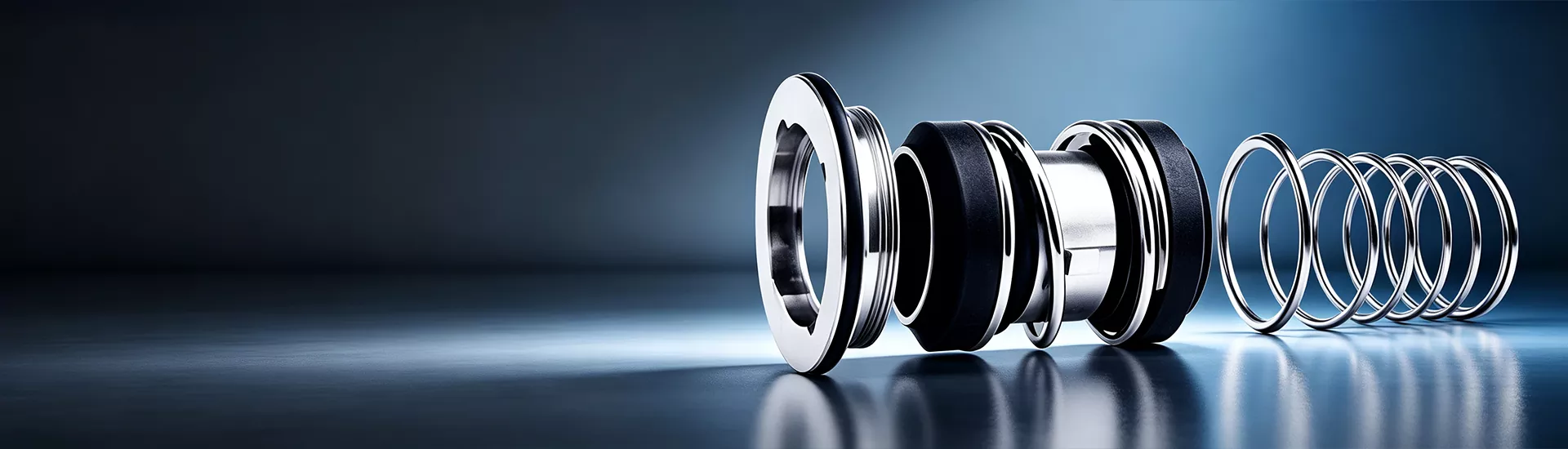
China Multi Spring Mechanical Seals Supplier
For demanding pump and mixer applications, Multi Spring Mechanical Seals from Qixing deliver reliable leakage control even under fluctuating pressure, temperature, and shaft movement. These seals are designed with multiple small coil springs arranged evenly around the shaft, which creates a uniform closing force on the seal faces. This design minimizes face distortion and improves tracking ability compared with traditional single spring seals. Qixing manufactures multi spring mechanical seals for a wide range of industrial equipment, including centrifugal pumps, agitators, reactors, compressors, and rotary joints. The seals are used in chemical processing, water treatment, oil and gas, pharmaceutical, food and beverage, pulp and paper, and power generation. Qixing focuses on precision machining, high-grade materials, and strict quality control to ensure consistent performance in demanding environments.
Common Material Combinations for Springs and Metals
- SS316 springs: Suitable for water, oils, and mild chemicals at temperatures up to 160°C.
- Hastelloy C-276 springs: Excellent resistance to oxidizing acids, chlorides, and seawater.
- Alloy 20 springs: Good resistance to sulfuric acid, phosphoric acid, and nitric acid environments.
- Inconel 718 springs: High strength and corrosion resistance at elevated temperatures up to 400°C.
- Duplex stainless steel housing: Higher strength and better chloride stress corrosion cracking resistance than SS316.
- Titanium housing: Lightweight and highly resistant to oxidizing media, chlorine, and seawater.
Installation and Operational Best Practices
Proper installation is essential for maximizing the service life of a multi spring mechanical seal. Before installation, verify that the shaft or sleeve is free from burrs, scratches, and corrosion. Check the axial movement and radial runout of the shaft. Qixing recommends a maximum radial runout of 0.05 mm and axial movement of ±0.1 mm for standard seal models. The seal faces must be cleaned with a compatible solvent and handled with care to avoid fingerprints or dust. Lubricate the O-rings with a thin film of suitable lubricant before assembly, but do not use grease on the seal faces. Ensure the seal compression is set according to the installation drawing. Over-compression can cause excessive heat and face wear, while under-compression may lead to leakage at startup. After installation, rotate the shaft by hand to check for interference or rubbing. Use the correct environmental control plan, such as API Plan 11, 13, 32, or 53/54 for double seals, depending on the process conditions. Clean flush fluid and proper cooling are critical for high-speed or high-temperature services. Qixing supplies cartridge-mounted multi spring seals that simplify installation and reduce the risk of assembly errors.
Frequently Asked Questions
Q1: What is a multi spring mechanical seal and how does it work?
A: A multi spring mechanical seal uses several small helical springs arranged around the shaft to push the rotating seal face against the stationary face. The springs create a constant closing force that compensates for face wear and shaft movement. When the pump shaft rotates, the rotating face turns against the stationary face, and a thin fluid film forms between them. This film lubricates the faces and prevents the process fluid from leaking along the shaft. Because the springs are small and distributed evenly, the face load remains uniform even if one spring weakens or if the shaft deflects. Qixing multi spring seals are designed so that the springs are stationary in most models, which is beneficial for fluids with suspended solids because the springs do not rotate in the slurry and collect debris.
Q2: How do multi spring seals differ from single spring mechanical seals?
A: Single spring seals use one large coil spring that wraps around the shaft, while multi spring seals use several smaller springs positioned parallel to the shaft. The main differences are load distribution, speed capability, and tolerance to shaft misalignment. Multi spring designs distribute the closing force evenly, which reduces face distortion and allows higher rotational speeds. Single spring designs can be affected by centrifugal force at high speeds, causing uneven face pressure. Multi spring seals also have a shorter axial length and can accommodate more axial movement. However, single spring seals are often better for viscous or fibrous media because the large spring is less likely to clog. Qixing offers both types and helps customers choose based on fluid properties and operating conditions.
Q3: How do I choose the right face material combination for a multi spring mechanical seal?
A: Face material selection is based on chemical compatibility, abrasion resistance, dry-running tolerance, and thermal shock resistance. For general water and light chemical service, carbon graphite against silicon carbide is a cost-effective and reliable combination. For fluids containing abrasive particles, tungsten carbide against silicon carbide or tungsten carbide against tungsten carbide is recommended because hard faces resist wear. For very poor lubricating fluids or high temperatures, sintered silicon carbide against sintered silicon carbide is preferred because it has excellent thermal conductivity and low friction. Qixing provides a material selection table and application engineers who can perform a detailed analysis using the fluid properties and operating parameters.
Q4: What are the most common causes of multi spring seal failure?
A: The most common causes of multi spring mechanical seal failure include dry running, solids buildup on the seal faces, incorrect installation, shaft misalignment, excessive pressure or temperature, and chemical attack of elastomers. Dry running occurs when the fluid film between the faces is lost, causing rapid temperature rise and face cracking. Solids can accumulate around the springs and prevent proper face loading, especially if the springs are rotating in the fluid. Incorrect compression setting during installation can cause the seal to leak immediately or wear prematurely. Qixing recommends using the correct environmental control plan, checking shaft runout, and following installation instructions carefully. Regular monitoring of flush fluid pressure and temperature also helps prevent failures.
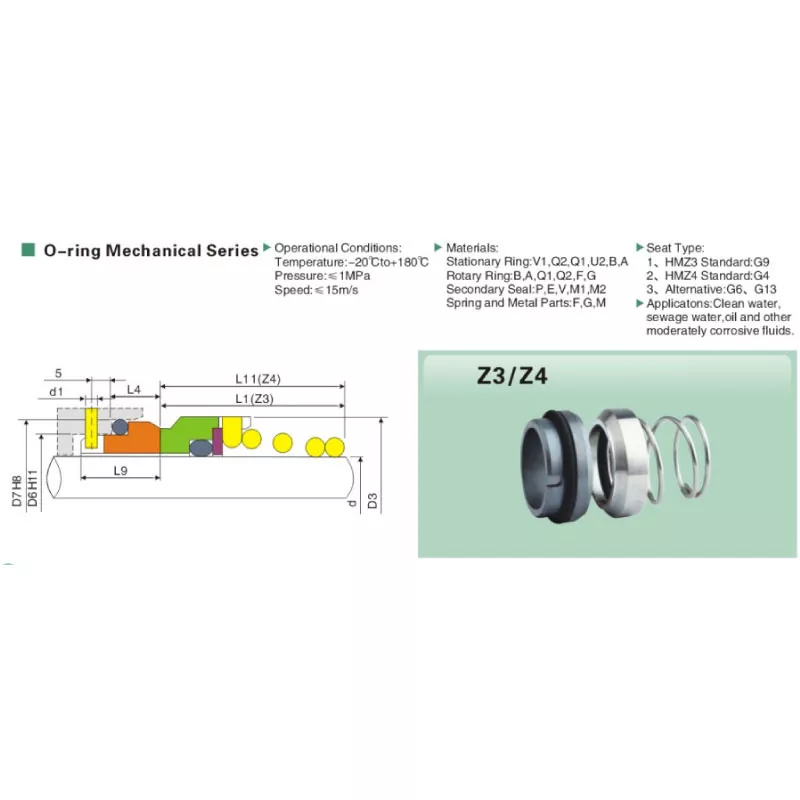
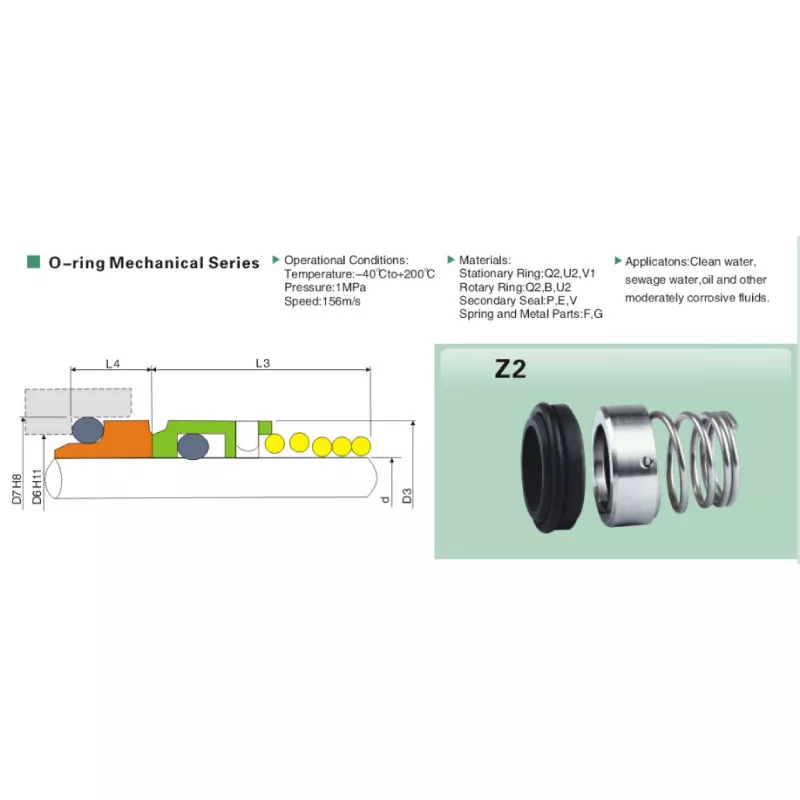
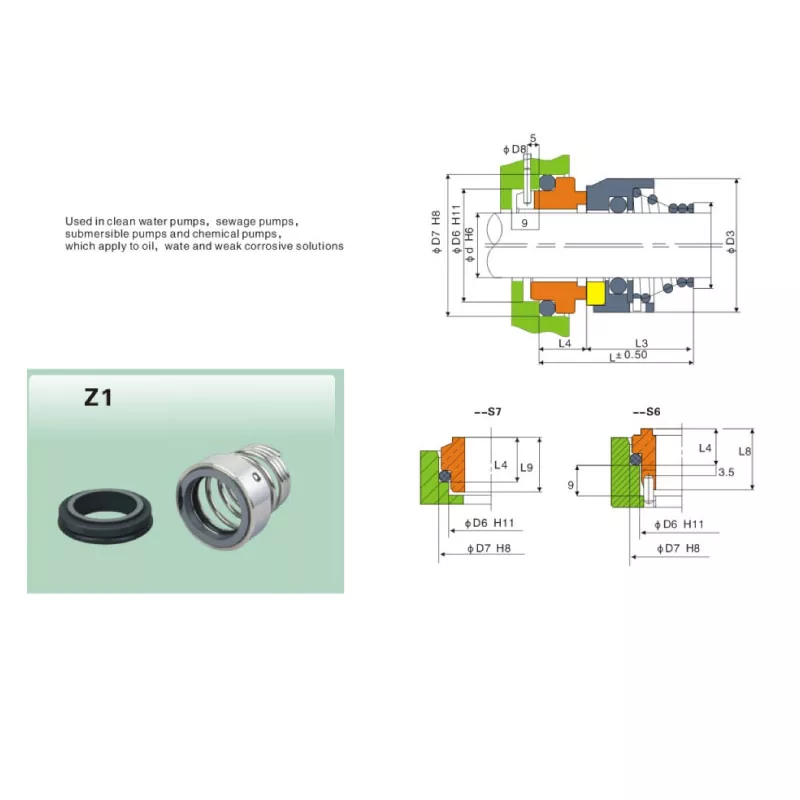
- View as
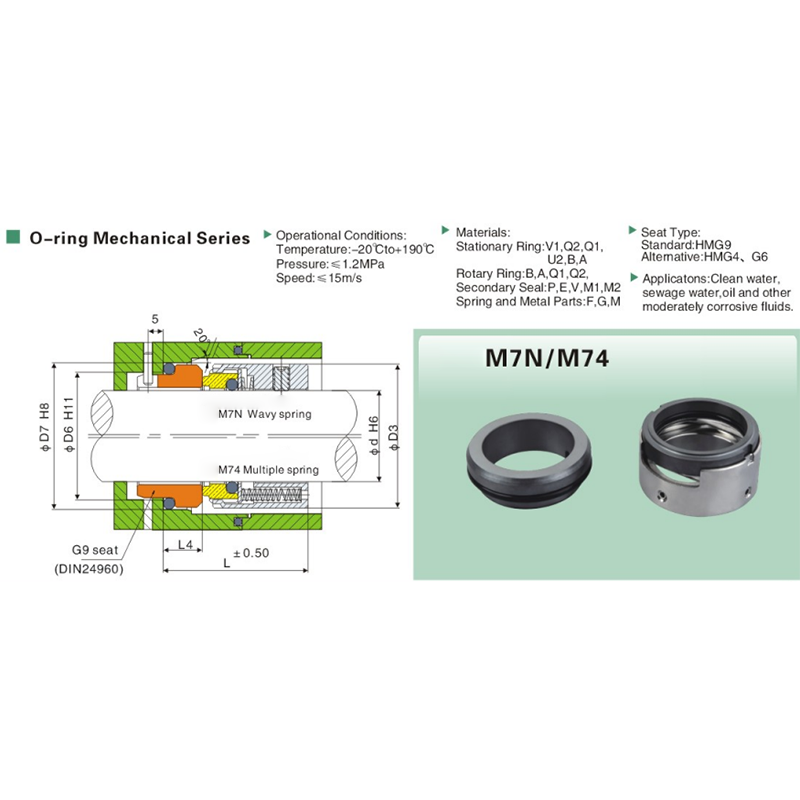
M7N Multi Spring Mechanical Seal
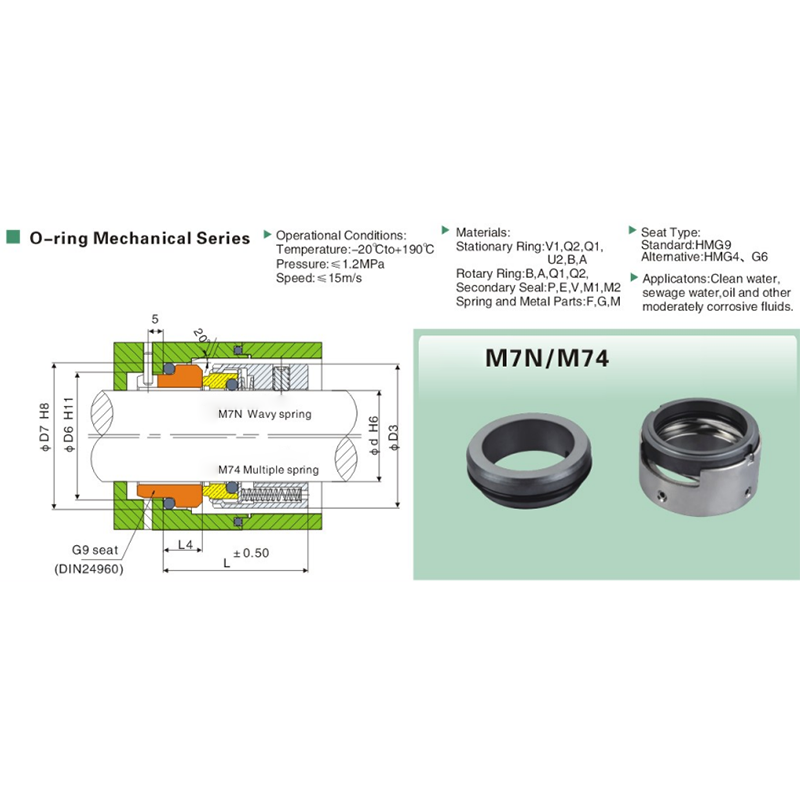
Qixing professionally produces high-quality M7N Multi Spring Mechanical Seal. Our factory also provides customized services and free samples for you.. Available in 14-100 mm shaft sizes, the M7N operates from -20°C to +190°C, at pressure up to 1.2 MPa and sliding speed up to 15 m/s. It is suitable for clean water, sewage water, oil and other moderately corrosive fluids.
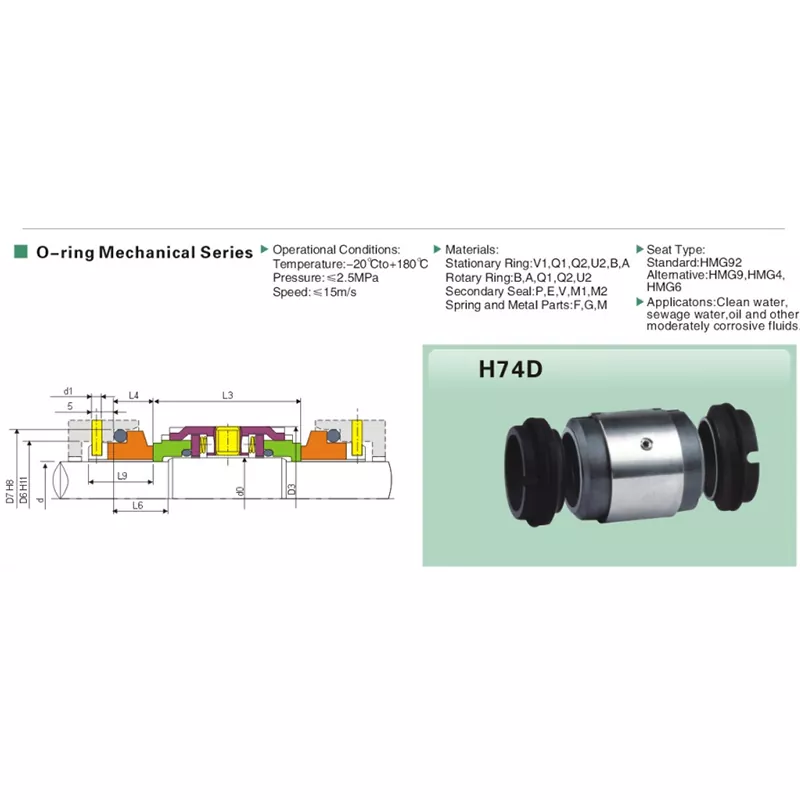
H74D Multi Spring Mechanical Seal
Qixing provides discount H74D Multi Spring Mechanical Seal for bulk orders. This O-ring multi spring seal covers 14-100 mm shaft sizes and is designed for clean water, sewage water, oil and other moderately corrosive fluids.
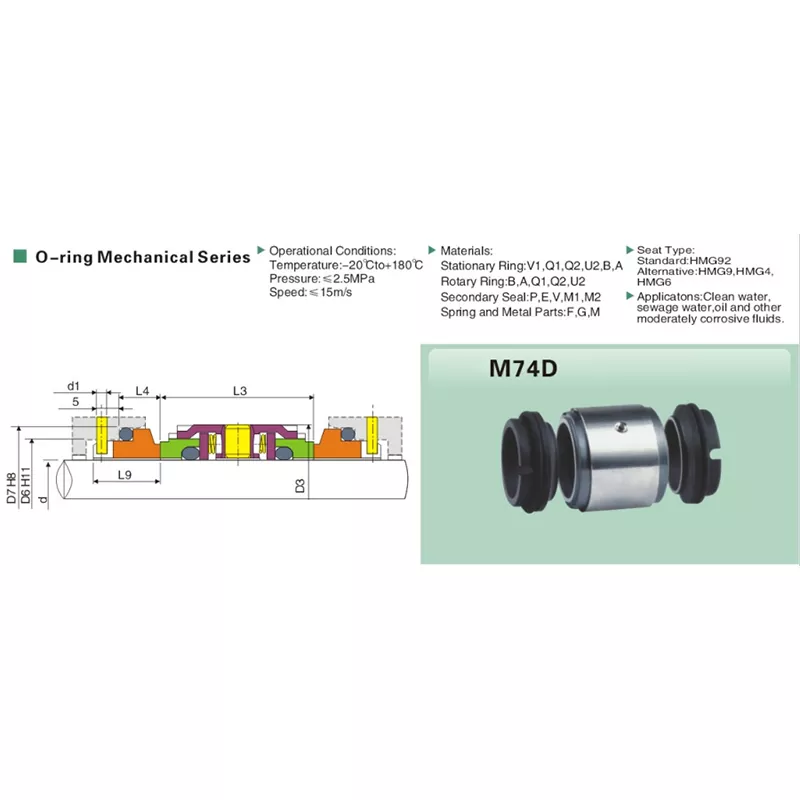
M74D Multi Spring Mechanical Seal
Qixing is a professional M74D Multi Spring Mechanical Seal manufacturer and supplier offering customized factory solutions for industrial buyers. This double mechanical seal uses an O-ring design, covers 18-100 mm shaft sizes, and supports water, sewage, oil and other moderately corrosive fluids.
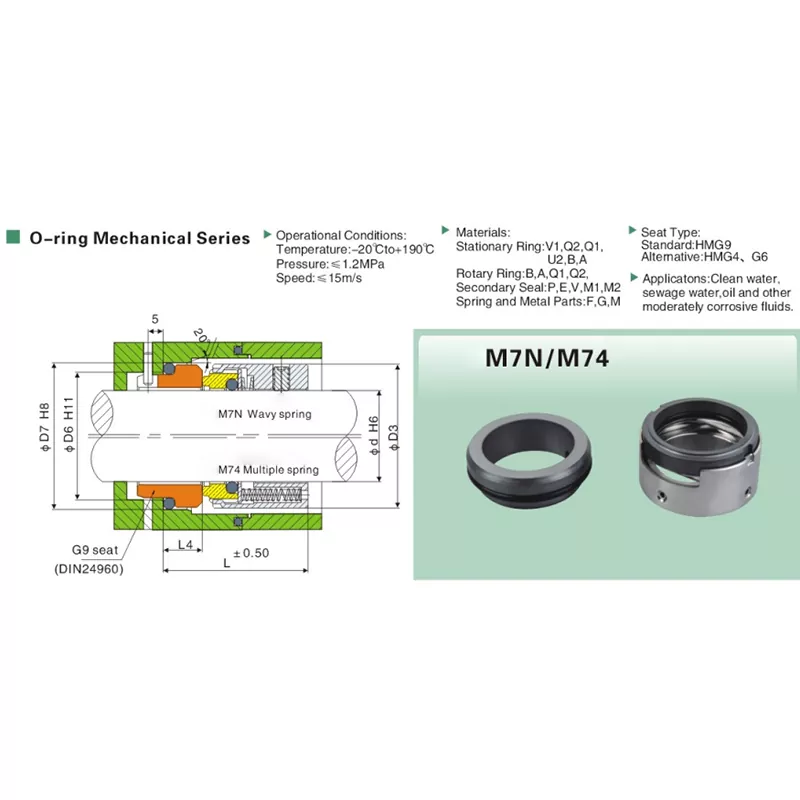
M74 Multi Spring Mechanical Seal
The Qixing M74 Multi Spring Mechanical Seal fits almost any European pump cavity. Rated to +190C and 1.2 MPa in shaft sizes 14 mm to 100 mm, it is the multi spring mechanical seal to specify when seat-cavity flexibility and high-temperature service matter more than maximum pressure. Buy direct from the Qixing factory in China.
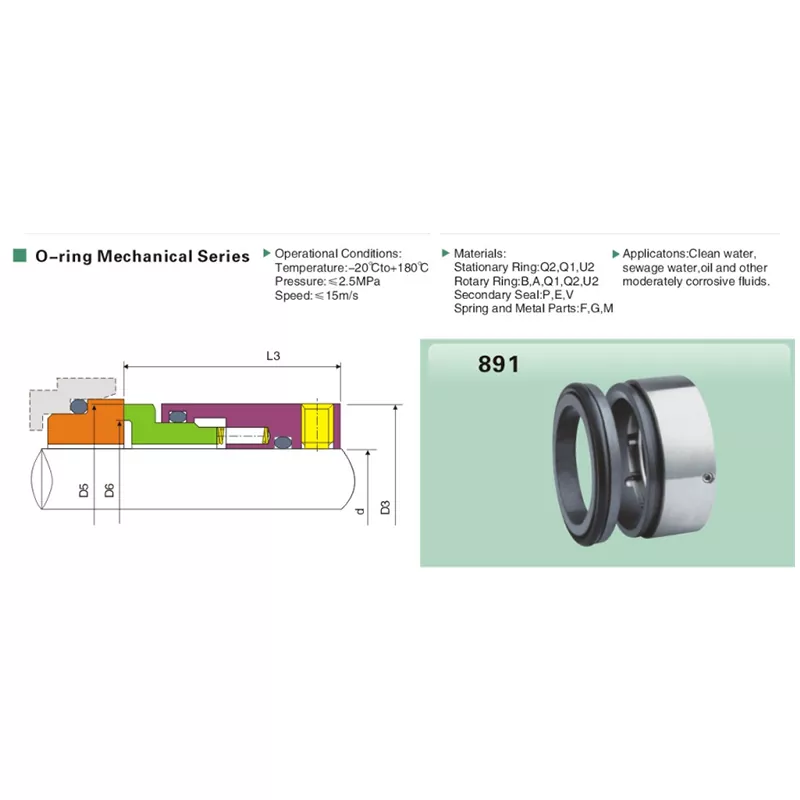
891 Multi Spring Mechanical Seal
The Qixing 891 Multi Spring Mechanical Seal is a heavy-duty multi spring mechanical seal rated to 2.5 MPa, -20C to +180C, in both metric (25-100 mm) and imperial (1.000"-4.000") shaft sizes. Purchase wholesale or OEM at affordable price. Send inquiry now!
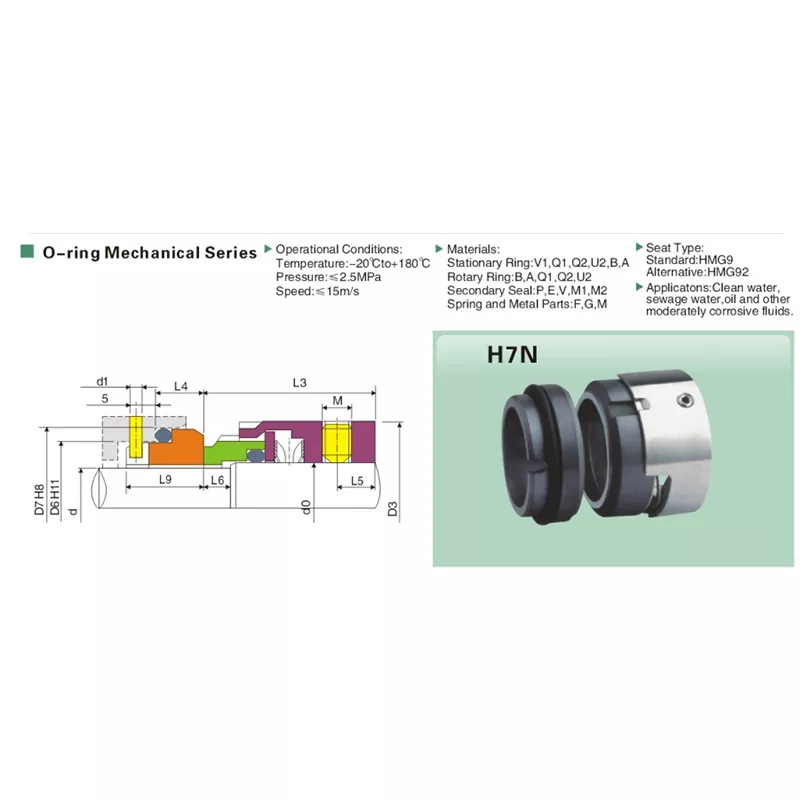
H7N Multi Spring Mechanical Seal
Qixing is a professional H7N Multi Spring Mechanical Seal manufacturer and supplier offering customized factory solutions for industrial buyers. This multi spring mechanical seal features an O-ring design, 14-100 mm shaft sizes, and configurable materials for clean water, sewage, oil and moderately corrosive fluids.
Qixing offers in-stock Multi Spring Mechanical Seals for global buyers. Buy wholesale or bulk at low price. Send inquiry now!